




Pancreatic Cancer
Latest News
Advertisement
Video Series



Latest Videos




Shorts

1:01
Daraxonrasib in 2L PDAC May be the GI Abstract of ASCO 2026
15 days ago
by
Nicholas James Hornstein, MD, PhD

1:12
Who Should Be Selected for Robotic vs Open Pancreaticoduodenectomy?
a month ago
by
Mohamed Adam, MD

0:57
Life After The Whipple Surgery: Grocery Shopping 7 Days Later
a month ago
by
Mohamed Adam, MD

1:00
Inching Closer to Taming KRAS in Pancreatic Cancer With New Advancements
a month ago
by
Asfar Azmi, PhD

0:46
The Adverse Effects of Daraxonrasib in Pretreated mPDAC
2 months ago
by
Diane Simeone, MD

0:57
Denervation Shows Different Pancreatic Tumor Reductions Across Sexes
3 months ago
by
Sebnem Ece Eksi, PhD
0:39
Examining 212Pb-DOTAMTATE Clinical Outcomes in PRRT-Naive GEP-NETs
7 months ago
by
Mary Maluccio, MD, MPH, FACS

1:13
Predicting Early Post-Surgical Recurrence in pNETs
7 months ago
by
Stefano Partelli, MD, PhD
1:06
CUTNETs: Spotlighting a Collaboration Between Surgery and NET Oncology
7 months ago
by
Julie Hallet, MD, MSc, FRCSC
Podcasts



































































Advertisement
More News
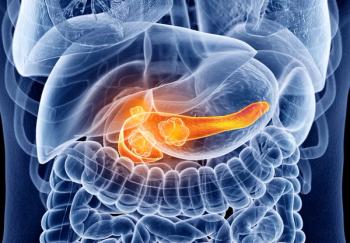
Philip Blumenfeld, MD, discussed the feasibility of radium 224 Alpha DaRT sources delivered via endoscopic ultrasound for patients with pancreatic cancer.

The FDA issued a “safe to proceed” letter for an expanded access program for daraxonrasib in metastatic pancreatic ductal adenocarcinoma.
According to Asfar Azmi, PhD, results from the study showed that the PCNA inhibitor AOH1996 was synergistic with KRAS inhibitors of all classes.

Asfar Azmi, PhD, discussed a poster from the AACR Annual Meeting that investigated the NAMPT inhibitor RPT-E-037 and the pan-RAS inhibitor daraxonrasib in pancreatic cancer.

Data from a phase 1 trial suggest that durable, vaccine-induced T-cell memory may be achievable even in pancreatic ductal adenocarcinoma.
The FDA has granted fast track designation to BBO-11818, an investigational pan-KRAS inhibitor, for advanced KRAS-mutant pancreatic ductal adenocarcinoma.

Diane Simeone, MD, discussed efficacy results from the phase 3 RASolute 302 trial evaluating daraxonrasib in patients with metastatic pancreatic cancer.
Results from the phase 3 RASolute 302 trial showed that daraxonrasib improved median OS compared with standard chemotherapy in metastatic PDAC.
Integrating a medically supervised ketogenic diet with gemcitabine, nab-paclitaxel, and cisplatin significantly extends OS in those with metastatic PDAC.

Sebnem Ece Eksi, PhD, discussed how sympathetic signaling drives CAF activation and tissue remodeling to support tumor progression in pancreatic cancer.
Namodenoson did not exhibit any new safety signals or unexpected toxicity as a treatment for patients with PDAC who progressed on at least 1 systemic therapy.
Neoadjuvant mFOLFIRINOX plus nivolumab in borderline-resectable pancreatic ductal adenocarcinoma demonstrated a 100% R0 resection rate.

Neoadjuvant therapy improves survival for patients with upfront resectable pancreatic cancer and minor PMV abutment vs an upfront surgical approach.

Diane Simeone, MD, highlights the necessity of a collaborative approach to pancreatic cancer screening, similar to trends across multiple disease states.
The PRECEDE Consortium is a multidisciplinary effort to drive the earlier detection of pancreatic cancer and raise the survival rate to 50%.
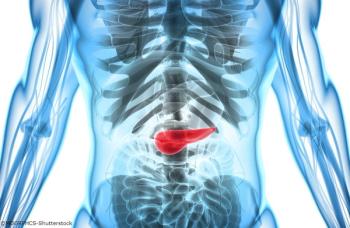
PANOVA-3 findings demonstrated that patients with previously untreated pancreatic cancer experienced better outcomes when adding TTFields to chemotherapy.
Adding ANPEP and PIGR to a biomarker blood panel of CA19-9 and THBS2 significantly improved the detection rate of any-stage pancreatic cancer.
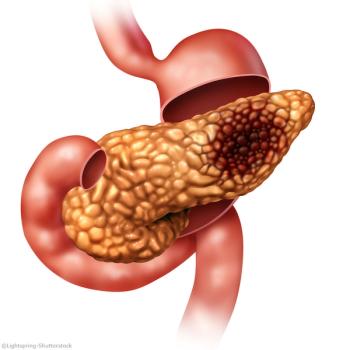
Toxicities with streptozotocin/5-fluorouracil and everolimus were comparable with other orally available chemotherapeutic schemes in this NET population.
Patients with pancreatic cancer who received up to 6 infusions of the multiantigen-targeted T cell product only experienced 1 treatment-related serious AE.
Results from arm A of a phase 1/2 trial showed improved efficacy with multi-antigen targeted T cells plus frontline chemotherapy.
The incidence and severity of AEs with eryaspase/chemotherapy was generally consistent with previous reports of chemotherapy alone in advanced PDAC.

Genetic backgrounds and ancestry may hold clues for better understanding pancreatic cancer, which may subsequently mitigate different disparities.
Factors like genetic mutations and smoking may represent red flags in pancreatic cancer detection, said Jose G. Trevino, II, MD, FACS.
Results from the phase 3 COMPETE trial demonstrated that 177Lu-edotreotide improved PFS and ORR compared with everolimus in patients with GEP-NETs.
Phase 2 data show consistent overall immunotherapy immunogenicity with ELI-002 7P in those with KRAS-mutated pancreatic ductal adenocarcinoma.
Advertisement
Advertisement
Trending on CancerNetwork
1
Melanoma Trials You May Have Missed at ASCO 2026
2
Daraxonrasib/Vopimetostat Yield Stunning Response Rate in MTAP-del Pancreatic Cancer
3
NMPA Grants ADRX-0405 IND Clearance in Late-Stage Solid/Prostate Tumors
4
Radiation Oncology Trials You May Have Missed at ASCO 2026
5