
As MZL is such a rare subtype of lymphoma, it can be hard to find or begin trials geared specifically toward this population.

Your AI-Trained Oncology Knowledge Connection!
As MZL is such a rare subtype of lymphoma, it can be hard to find or begin trials geared specifically toward this population.
Ahmad Tarhini, MD, PhD, and Hussein A. Tawbi, MD, PhD, discussed data from the RELATIVITY-047 and CheckMate 076 trial for patients with melanoma.

During the 66th American Society of Hematology Annual Meeting and Exposition, experts in multiple myeloma gathered to discuss the impact of maintenance therapy and minimal residual disease (MRD) in patients with newly diagnosed transplant-eligible or -ineligible multiple myeloma.

Potential contributing factors of marginal zone lymphoma (MZL) were highlighted in a recent discussion with James R. Cerhan, MD, PhD.
Juan Alderuccio, MD, discussed treatment strategies for MZL, particularly as they relate to quality of life, and the role of prognosis models on treatment.

Julie M. Vose, MD, MBA, answered questions about the significance and potential impact of MZL Workshop.

The panel discussed the different ways to treat patients with HER2-positive metastatic breast cancer who also have brain metastases.

Alexander Spira, MD, and Julia Lazo, RN, spoke with Melinda Reubens, who was diagnosed with EGFR-mutant NSCLC, and her husband Justin.
A panel of experts met to discuss the best treatment options for patients with EGFR or TP53-mutated non–small cell lung cancer.

As part of a Satellite Sessions program focused on the Cleveland Clinic and surrounding institutions, CancerNetwork hosted a panel discussion on treatment options for patients with EGFR-mutated NSCLC.

The discussion on NSCLC narrowed in on findings from recent clinical trials, particularly involving a combination regimen of amivantamab plus lazertinib vs osimertinib and chemotherapy.

Referring to the NCCN guidelines for the treatment of EGFR-mutated NSCLC will help clinicians determine which treatments are best recommended.
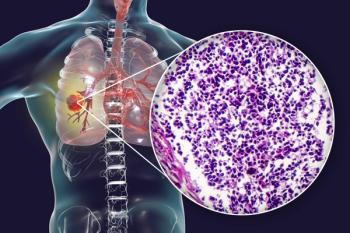
The combination of amivantamab plus lazertinib has emerged as a potential treatment option for patients with EGFR-mutated NSCLC and has shown sufficient efficacy responses.
A Satellite Sessions event that took place at Fred Hutchinson Cancer Center and discussed treatments surrounding LCL and CLL.
Brad S. Kahl, MD, and Tycel Phillips, MD, discussed the use of acalabrutinib plus bendamustine and rituximab for patients with untreated MCL.
An unusual patient case was presented during a Frontline Forum where experts worked through how to appropriately treat a patient who was having consistent fevers and pain.
During the 2024 IMS Annual Meeting, colleagues gathered to discuss the latest advancements in multiple myeloma.

In a From All Angles program, a patient and her treating physician spoke about the initial diagnosis, care coordination, communication, and the adverse effects observed.
Joshua K. Sabari, MD, and Sandip P. Patel, MD, discussed long-term findings from the phase 3 MARIPOSA trial.
The Oncology Brothers spoke with Benjamin P. Levy, MD, regarding treatment updates for patients with NSCLC with HER2 expression.
During the 2024 IMS conference, teams from Cleveland, Ohio, and New York, New York, met to debate the latest advances in multiple myeloma.
The program was brought together to discuss immunotherapy options for non–clear cell RCC in light of emerging clinical trial data and NCCN guidelines.
Experts in multiple myeloma spoke about optimal treatment strategies for patients who receive bispecific therapy, focusing specifically on facilitating a multifaceted approach between academic and community practices.

John Marshall, MD, discussed zolbetuximab, which the FDA recently approved for patients with CLDN18.2–positive locally advanced unresectable or metastatic HER2-negative gastric or GEJ adenocarcinoma.
Experts in multiple myeloma gathered to debate current treatment options in the space during a recent Face Off.
The use of CAR T-cell therapy and other sequencing options were discussed for patients with multiple myeloma.
A panel discussed on RCC and the differentiation in the identification and treatment of clear and non-clear cell RCC.

Experts in multiple myeloma discussed real-world efficacy and safety data associated with the use of GPRC5D-targeting bispecific agents to treat patients with R/R multiple myeloma.
Clinicians focused on CLL, follicular lymphoma, and MCL gathered during a Frontline Forum to discuss the use of BTKi in each respective disease state.
David M. Swoboda, MD, and Andrew Kuykendall, MD, spoke about the current treatment strategies and potential advancements that may improve outcomes such as spleen volume reduction in the myelofibrosis field.