
Opinion|Videos|May 15, 2024
Closing Thoughts on the Future of NSCLC
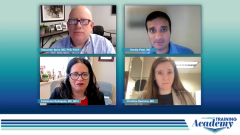
In their closing remarks, the panel reflects on the presented patient cases and shares insights on the future of non-small cell lung cancer (NSCLC) treatment.
Advertisement
Episodes in this series


Advertisement
Related to this article
![“We want to make sure we are not producing a financial burden for patients in exchange for that convenience [with subcutaneous therapies],” said Thaddeus Beck, MD, FACP.](https://cdn.sanity.io/images/0vv8moc6/cancernetwork/cbb0bc385f194a5dd84702ed02a21020e3a6977b-1200x1800.jpg?w=350&fit=crop&auto=format)
“We want to make sure we are not producing a financial burden for patients in exchange for that convenience [with subcutaneous therapies],” said Thaddeus Beck, MD, FACP.
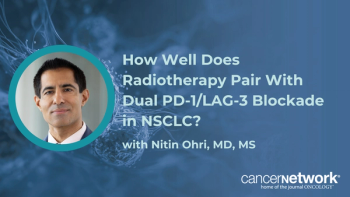
Nitin Ohri, MD, MS, explains the rationale for combining thoracic radiotherapy with dual PD-1 and LAG-3 blockade in locally advanced NSCLC.
At the 2026 ASTRO Annual Meeting, Marcio A. Fagundes, MD, discussed when proton therapy is most justified over photon approaches in prostate cancer.

Ayal Aizer, MD, MHS, discussed Alliance A071801 data favoring fractionated SRS over single-fraction SRS after brain metastasis resection.

Marcio A. Fagundes, MD, explained how proton therapy and rectal spacers can reduce radiation exposure to the rectum, bowel, and bladder in prostate cancer.

Bruce Haffty, MD, and Mutlay Sayan, MD, on building radiation oncology at Rutgers, the future of the field, and a remarkable journey from eastern Turkey to Harvard faculty.
Marcio A. Fagundes, MD, discussed disease control by risk group among 404 patients with prostate cancer treated with intensity-modulated proton therapy.

The approval expands the indication of pirtobrutinib to patients with previously untreated chronic lymphocytic leukemia/small lymphocytic lymphoma with no known 17p deletion.
Advertisement
Advertisement
Trending on CancerNetwork
1
EXCALIBER-RRMM: Iberdomide in Relapsed/Refractory Multiple Myeloma
2
Prioritizing Proton Therapy for Pelvic Nodal Irradiation in Prostate Cancer
3
Alliance A071801 Supports Fractionated SRS After Brain Metastasis Surgery
4
FDA OKs Pirtobrutinib in Frontline CLL/SLL
5