
Career Center
Trending on CancerNetwork
FDA Approves Talazoparib/Enzalutamide for HRR Gene-Altered Metastatic Prostate Cancer
Ivonescimab Combo Improves Survival in Advanced Biliary Tract Cancer
Exploring The Use of GLP-1 Receptor Agonists in Breast Cancer Care
Sac-TMT Improves Survival vs Chemotherapy in Pretreated Endometrial Cancer
Dostarlimab Yields Sustained cCRs in dMMR/MSI-H Locally Advanced Rectal Cancer
Latest News









Shorts













Videos





September ONCOLOGY Publication
The September issue of ONCOLOGY features a rare case study on glioblastoma, discussions on end-of-life care, and insights into the field of pediatric oncology.

ONCOLOGY On The Go Podcast
Listen to our latest episode of ONCOLOGY on The Go with insights from expert multidisciplinary professionals across the oncology space.

Find Us On YouTube
CancerNetwork in now on YouTube! We'll be discussing in-depth topics, and speaking with top leaders in the oncology space.

CancerNetwork® Oncology Career Center
Your next job in oncology is just a click away! Explore positions across the cancer care industry with CancerNetwork® Oncology Career Center.

Subscribe to Our eNewsletter Today!
Get comprehensive coverage for the multidisciplinary oncology community with accurate, credible, and timely news and expert insights.





















































All News

Oral vitamin C improved OS in patients with CCUS or lower-risk myeloid malignancies in the EVITA trial despite missing the clonal growth primary end point.

In KEYNOTE-412, early ctDNA clearance was linked with better survival with pembrolizumab plus chemoradiotherapy in HPV-negative head and neck cancer.
Phase 3 TALAPRO-3 data support the FDA approval of talazoparib/enzalutamide in HRR gene-altered metastatic androgen pathway modulation-naïve or -sensitive prostate cancer.

Initial data from the ROSETTA Lung-107 trial support further study of pumitamig in metastatic NSCLC previously managed with an immunotherapy-based regimen.

More than two-thirds of patients with mismatch repair–deficient locally advanced rectal cancer achieved a clinical complete response with dostarlimab alone.

In the TOP-1 trial, omitting RT and endocrine therapy after breast-conserving surgery yielded a 14.8% 5-year local recurrence risk in women aged 70 and older.

A multidisciplinary panel discusses the effects of GLP-1 RA use during breast cancer care along with insurance denials, costs, and other critical areas.

Data from the phase 3 HARMONi-GI1 trial support first-line ivonescimab plus chemotherapy as a new standard of care in advanced biliary tract cancer.

Based on data from the phase 3 SAFFRON trial, osimertinib plus savolitinib may establish a new global standard of care in this EGFR-mutated NSCLC population.

Sone-Ve significantly improved OS vs investigator’s choice in previously treated CLDN18.2-positive gastroesophageal carcinoma in CLARITY-Gastric01.

Data from the phase 3 Krascendo 1 trial support divarasib as a new standard in previously treated KRAS G12C–mutated non–small cell lung cancer.

Triplets did not beat pembrolizumab plus lenvatinib in frontline RCC, while belzutifan plus lenvatinib and perioperative pembrolizumab showed benefit.

Long-term PEACE-1 data showed that adding abiraterone acetate plus prednisone to standard of care extended median OS by 1.5 years in de novo metastatic CSPC.

Adding perioperative apalutamide and ADT to radical prostatectomy reduced the risk of an oncologic event or death by 62% in high-risk prostate cancer.

The phase 3 DeLLphi-305 trial may support tarlatamab plus durvalumab as a new standard-of-care frontline maintenance option in extensive-stage SCLC.

Full INTerpath-001 data at ESMO 2026 detail OS, subgroup, and safety results with intismeran plus pembrolizumab in resected stage IIB to IV melanoma.

In the phase 1/2 Bela-DRd study, over 90% of patients responded to belantamab mafodotin plus daratumumab, lenalidomide, and dexamethasone.

“The more representation, the more people we have participating in clinical trials, the more applicable the data,” said Patricia A. Robinson, MD.

In the phase 3 TANGENT trial, an 8-week course of emactuzumab improved objective response rate vs placebo in patients with tenosynovial giant cell tumor.

In an exploratory KEYNOTE-B15 analysis, ctDNA clearance was higher with enfortumab vedotin plus pembrolizumab than with cisplatin and gemcitabine.

Subgroup analyses of the phase 3 RASolute 302 trial showed overall survival favored daraxonrasib over chemotherapy in metastatic pancreatic cancer.

Adding pembrolizumab to carboplatin and etoposide improved response rates and OS vs chemotherapy alone in metastatic NEPC in KEYNOTE-365 cohort I.

Posters covered a companion diagnostic for niraparib plus AAP, response biomarkers for radioligand therapy, and genomic profile differences in metastatic CRPC.

Six-year NATALEE data show ribociclib plus an NSAI reduced the risk of death by 19% vs NSAI alone in HR+/HER2- early breast cancer.

Final NSABP B-42 data show 5 additional years of letrozole improved DFS, BCFI, and distant recurrence vs placebo at 15 years, with no OS difference.

Perioperative pembrolizumab plus neoadjuvant cisplatin and gemcitabine did not significantly improve EFS vs placebo in cisplatin-eligible MIBC in KEYNOTE-866.

Hope S. Rugo, MD, FASCO, and Irene M. Kang, MD, discussed ASCENT-03, -04, and TROPION-Breast02 data, sequencing, and toxicity in metastatic TNBC.

Pope Leo XIV’s lung adenocarcinoma diagnosis may increase awareness and combat stigma surrounding lung cancer screening.

Helena A. Yu, MD, discusses the background of REZILIENT3 and her key takeaways on zipalertinib in EGFR exon 20-mutated NSCLC.
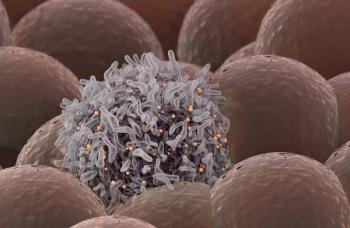
Intismeran autogene plus pembrolizumab cut the risk of recurrence or death by 42% vs pembrolizumab alone in resected stage IIB-IV melanoma.
Oana Danciu, MD, explained why phase 1 breast cancer trials are moving earlier in the treatment course and how disease stability guides patient selection.
The FDA based its approval of pembrolizumab on findings from the phase 2 KEYNOTE-158 trial.

Matthew J. Frigault, MD, and Adam D. Cohen, MD, discuss guidelines, 5-year data, sequencing, and referral practice for cellular therapy in multiple myeloma.