




Brain Cancer
Latest News

Advertisement
Latest Videos



CME Content































Advertisement
More News
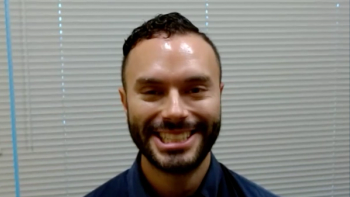
Raymond B. Mailhot, MD, MPH, discussed methods for comparing academic performances of patients following radiation therapy with healthy control groups.
The only way forward in the brain cancer field is to be open to mentoring others, according to Yoshie Umemura, MD.

Efficacy findings were enhanced when 177Lu-Dotatate was used to treat patients with grade II/III recurrent meningioma.
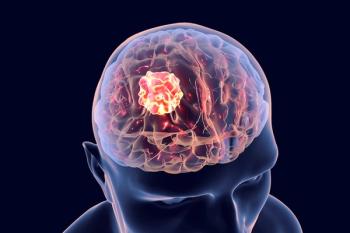
UNITED is the first trial to assess MR-guided weekly adaptive on-line and real-time radiotherapy with clinical target volume margin reductions.

The act of asking for help is critical to finding mentors who can help one advance in the brain cancer field, according to Yoshie Umemura, MD.
Investigators of the Gliofocus trial look to set a clinically relevant “benchmark” in the glioblastoma field, according to Nader Sanai, MD.
Through multidisciplinary collaboration, Yoshie Umemura, MD, and colleagues were able to organize the Gliofocus trial in brain cancer relatively fast.
Yoshie Umemura, MD, discusses how multiple departments can positively impact a patient with brain cancer during their visit to a medical center.

Antibody-drug conjugates and small molecule inhibitors may show utility in the neuro-oncology field, according to Nader Sanai, MD.
Phase 1 data may warrant further investigation of TLX101 plus external beam radiation therapy for patients with recurrent glioblastoma.
The phase 3 Gliofocus trial aims to meaningfully improve survival and quality of life with niraparib among patients with newly diagnosed glioblastoma.
Findings from a proof-of-concept study show a potential survival benefit with niraparib/radiotherapy in patients with newly diagnosed glioblastoma.

Neoadjuvant/adjuvant sacituzumab govitecan showed encouraging intratumoral concentrations in patients with brain metastases as well as glioblastoma.
Phase 3 data from the INDIGO trial support the FDA approval of vorasidenib for select patients with grade 2 astrocytoma or oligodendroglioma.
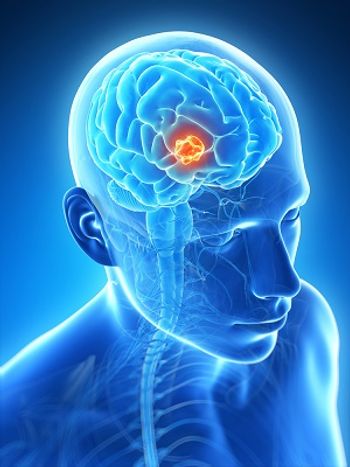
Developers plan to discuss findings from the phase 2/3 GBM AGILE study with the FDA to determine a potential approval pathway for paxalisib.
Timothy Chen, MD, highlights how technologies such as ZAP-X and proton therapy may improve outcomes for patients with cancer.
The FDA approval of the single-agent, oral pan-RAF inhibitor tovorafenib is based on efficacy results from the phase 2 FIREFLY-1 trial.
ZAP-X may provide submillimeter accuracy when administering radiation to patients with brain tumors.
TLX101 is currently under assessment as a treatment for glioma in the IPAX-2 and IPAX-Linz studies.
First-in-patient findings support AZD1390 as a potential radiosensitizer during the management of glioblastoma.
Findings highlighted tumor reductions in patients with recurrent glioblastoma who received CART-EGFR-IL13Rα2 cells at 2 dose levels.
Findings from a phase 1b trial support the tolerability and potential survival benefit of CAN-3110 as a treatment for patients with recurrent high-grade glioma.
Eflornithine, which was approved in adult and pediatric patients with high-risk neuroblastoma, was assessed in an externally controlled trial comparing results from Study 3b and Study ANBL0032.
The preliminary safety and efficacy of SONALA-001 is being assessed as part of the SDT-201 study in diffuse intrinsic pontine glioma.
The FDA has set a Prescription Drug User Fee Act date of April 30, 2024 for tovorafenib as a treatment for pediatric patients with relapsed or progressive low-grade glioma.
Advertisement
Advertisement
Trending on CancerNetwork
1
Modifiable Risk Factors Suggest Potential for Improving Cancer Prevention
2
2026 Tandem Meetings: What’s the Latest Research in Multiple Myeloma?
3
Dato-DXd Receives Priority Review in Unresectable/Metastatic TNBC
4
Barriers to CAR T-Cell Referral and Center Access in Multiple Myeloma
5