



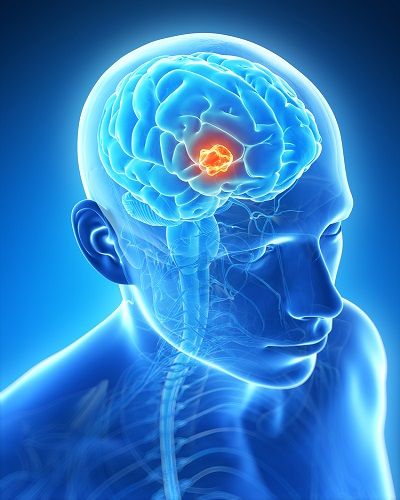


Brain Cancer
Latest News
Advertisement
Latest Videos



CME Content































Advertisement
More News
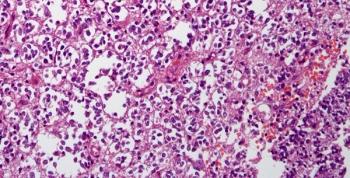
Data from the phase 2 FIREFLY-1 trial indicated that tovorafenib yielded responses among pretreated patients with recurrent or progressive pediatric low-grade glioma.

The TriNetra™-Glio liquid biopsy has received breakthrough device designation from the FDA for the diagnosis of brain tumors.

The FDA has followed the recommendation of its Oncologic Drugs Advisory Committee and issued a complete response letter denying approval to 131I-omburtamab as a treatment for central nervous system and leptomeningeal metastases stemming from neuroblastoma.

The multi-kinase inhibitor AUM302 received orphan drug designation from FDA for the treatment of neuroblastoma.

Autologous tumor lysate–loaded dendritic cell vaccine plus standard-of-care therapy improved survival outcomes vs standard-of-care alone in newly diagnosed and recurrent glioblastoma.
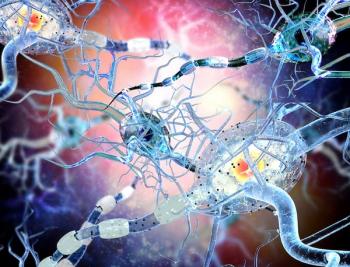
Pulsatile, convection-enhanced delivery of topotecan using a novel subcutaneous catheter-pump system implanted into the brain showed promising efficacy signals in patients with glioblastoma, according to findings from a phase 1b clinical trial.
Members of the FDA’s Oncologic Drugs Advisory Committee indicated there isn’t enough evidence to definitively confirm the overall survival benefit of 131I-omburtamab in pediatric patients with central nervous system or leptomeningeal metastases stemming from neuroblastoma.
Doses of Rhenium-186 nanoliposome above 100 Gy improved overall survival in recurrent glioma, according to results from the phase 1 ReSPECT-GBM trial presented at 2022 ESMO.

Guidelines from the American Society for Radiation Oncology on the use of radiation therapy for patients with IDH-mutant glioma included strong recommendations for close surveillance in IDH-mutant, 1p/19q codeleted, WHO grade 2 oligodendroglioma with no high-risk features and adjuvant radiotherapy for those with WHO grade 3 disease.

Results from a multicenter study showed similar median overall survival results with laser interstitial thermal therapy compared with other tumor resection studies that used radiation and chemotherapy followed by laser ablation in patients with IDH wild-type glioblastoma.

CV-01 delivery of sonodynamic therapy has been granted orphan drug designation and fast track designation by the FDA for the treatment of recurrent glioblastoma.

According to long-term data, first-line treatment with procarbazine, lomustine, and vincristine chemotherapy plus radiotherapy offered prolonged disease control and survival benefit in anaplastic oligodendroglial tumors.
Dual Targeted Treatment Improves Response Over Chemotherapy in BRAF V600+ Pediatric Low-Grade Glioma
BRAF V600 mutation–positive pediatric low-grade glioma positively responds to combination treatment with dabrafenib plus trametinib, according to data presented at 2022 ASCO.

Non-White Hispanic pediatric patients with neuroblastoma appear to have worse overall survival outcomes vs other patient subgroups.
Children and young adults with H3K27M-positive diffuse intrinsic pontine gliomas and spinal diffuse midline gliomas saw a clinical benefit when treated with GD2-directed chimeric antigen receptor T cell therapy.

Early findings from the phase 1/2a TEM-GBM study presented at the 2022 AACR Annual Meeting displayed potential of temferon to affect the tumor microenvironment of glioblastoma.
A biologics license application for omburtamab was resubmitted following a refusal to file letter in 2020 for pediatric patients with central nervous system/leptomeningeal metastatic from neuroblastoma.
The recommended dose of ceritinib once daily with food demonstrated promising preliminary clinical activity in patients with ALK-positive relapsed/recurrent inflammatory myofibroblastic tumors and anaplastic large cell lymphoma, and certain subsets of relapsed/refractory neuroblastoma.
Treatment with armodafinil did not result in a significant difference in cancer-related fatigue between treatment arms for patients with high-grade glioma.
NUV-422 has demonstrated favorable blood-brain barrier penetration in patients with high-grade gliomas.
Patients with newly diagnosed glioblastoma who were treated with paxalisib saw positive efficacy and safety results.
Patients with high-grade and low-grade brain tumors who carry the BRAF V600E mutation were treated with dabrafenib and trametinib saw clinically meaningful results.
Patients with newly diagnosed glioblastoma saw improved progression-free survival when treated with tumor treating fields, pembrolizumab, and temozolomide versus historical control data.
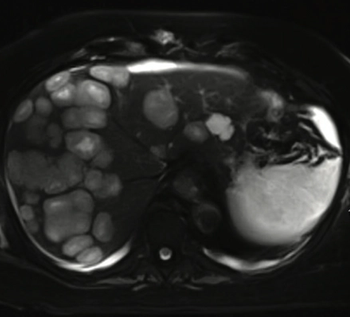
Ghulam Gous, MD, and colleagues report a case of glioblastoma with extensive liver metastases along with a review of previous reports of liver metastasis from glioblastomas and the possible mechanisms of metastasis.
Patients who are White British and have been diagnosed with a malignant primary brain tumor were found to have a shorter survival compared with patients of other ethnicities.
Advertisement
Advertisement
Trending on CancerNetwork
1
Modifiable Risk Factors Suggest Potential for Improving Cancer Prevention
2
Barriers to CAR T-Cell Referral and Center Access in Multiple Myeloma
3
2026 Tandem Meetings: What’s the Latest Research in Multiple Myeloma?
4
Real World Outcomes of CAR T-Cell Therapy in Multiple Myeloma Including Older and Comorbid Patients
5