





Colorectal Cancer
Latest News
Advertisement
Latest Videos


CME Content































Advertisement
More News

Tanios S. Bekaii-Saab, MD, gave an overview of colorectal cancer along with current standard of care, and potential treatment options.

Data from the phase 2 SAMCO-PRODIGE 54 trial may support the use of immune checkpoint inhibitors over standard second-line therapy in mismatch repair–deficient and/or microsatellite instability–high metastatic colorectal cancer.

Christina Wu, MB, BCh, MD, closes the program by expressing the necessity of enrolling patients with BRAF-mutant metastatic colorectal cancer in clinical trials, highlighting a second-line study led by the Southwest Oncology Group, new BRAF inhibitors, early phase studies at the Mayo Clinic, and an exciting study in the adjuvant setting.

Christina Wu, MB, BCh, MD, shares data from the phase 3 BREAKWATER trial, which assesses first-line targeted treatment strategies for patients with BRAF V600E-mutant metastatic colorectal cancer.

Investigators report that MRI by itself seems to be an inadequate tool for determining pathologic complete response in rectal adenocarcinoma during total neoadjuvant therapy.
Daniel Ahn, DO, describes the BEACON study, a randomized phase 3 trial in metastatic colorectal cancer that led to the FDA approval of a doublet regimen.
Christina Wu, MB, BCh, MD, discusses BRAF V600E mutations in metastatic colorectal cancer, including the various detection methods, the different classes of BRAF mutations, and the evolution of targeting treatments.

Arvind N. Dasari, MD, and Cathy Eng, MD, discuss clinical trial data that may support the FDA approval of fruquintinib in metastatic colorectal cancer, and how it may impact the standard of care.

Daniel Walden, MD, presents the scenario of a 66-year-old man diagnosed with BRAF V600E-mutant metastatic colorectal cancer to the expert panel for discussion.
In a detailed conversation, Tanios Bekaii-Saab, MD, Daniel Ahn, DO, and Christina Wu, MB, BCh, MD, discuss various scenarios for treating HER2+ metastatic colorectal cancer, focusing on patient profiling, testing methods, and different sequencing strategies including the use of trastuzumab.
Daniel Ahn, DO, and Tanios Bekaii-Saab, MD, detail the findings of the DESTINY-CRC02 trial, which examined the efficacy of trastuzumab deruxtecan at different dosing levels in breast cancer and gastric cancer patients.
Christina Wu, MB, BCh, MD, shares the study design and efficacy data of the MOUNTAINEER-01 study, which explored combination tucatinib plus trastuzumab for the treatment of patients with HER2+ metastatic colorectal cancer.

Arvind N. Dasari, MD, and Cathy Eng, MD, gave an overview on the use of fruquintinib in colorectal cancer.
Daniel Walden, MD, presents the scenario of a 65-year-old man diagnosed with HER2+ metastatic colorectal cancer to the expert panel for discussion.
Experts emphasize the importance of acquiring both tissue and circulating tumor DNA (ctDNA) for molecular testing in patients with metastatic colorectal cancer, address challenges such as lack of tissue and costs, and highlight the role of HER2 as a biomarker.
Daniel Ahn, DO, discusses the evolution of biomarker testing in metastatic colorectal cancer, highlighting the shift from understanding only the prognostic implications of genetic alterations to recognizing their predictive role in targeted therapies, and emphasizes the potential of circulating tumor DNA for rapid diagnosis and assessing treatment response.
Tanios Bekaii-Saab, MD, and colleagues address updates in metastatic colorectal cancer treatment, highlighting its prevalence in the U.S., the concerning rise in younger patients, and the ongoing uncertainty regarding the causes of this trend, with potential factors like environment and microbiome under investigation.
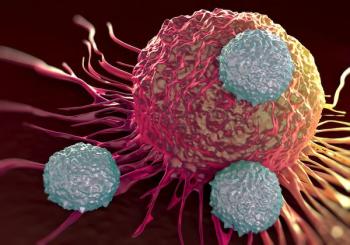
The FDA okayed 2 breakthrough therapy designations for fam-trastuzumab deruxtecan-nxki in HER2-positive solid tumors and colorectal cancer, which are based on data from the phase 2 DESTINY-PanTumor02 and DESTINY-CRC02 trials.

Results from a randomized trial suggest that neoadjuvant FOLFOX may be an effective treatment for patients with locally advanced rectal cancer who are suitable to undergo sphincter-sparing surgery.
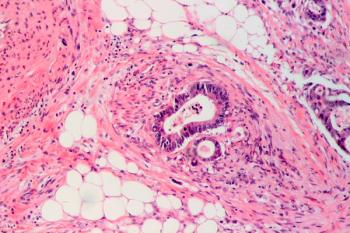
Prospective, real-world data indicate that most patients with colon or rectal cancer who undergo surgery remain independent.

The expert panel offers closing thoughts on MRD assessment and how ctDNA has been incorporated into clinical practice in the treatment of colorectal cancer.

Data from the phase 2 FIRE-4.5 trial suggest that cetuximab further reinforces a bevacizumab-based chemotherapy regimen as the frontline treatment of choice for BRAF-mutant, metastatic colorectal cancer.
Specialists on colorectal cancer discuss the effect of MRD on monitoring strategies and adjuvant therapy decisions for patients with colorectal cancer.

An overview colorectal cancer clinical trials studying early intervention based on MRD positivity.

Results from the phase 3 SUNLIGHT trial support the approval of trifluridine/tipiracil plus bevacizumab in patients with previously treated, metastatic colorectal cancer.
Advertisement
Advertisement
Trending on CancerNetwork
1
Modifiable Risk Factors Suggest Potential for Improving Cancer Prevention
2
2026 Tandem Meetings: What’s the Latest Research in Multiple Myeloma?
3
Barriers to CAR T-Cell Referral and Center Access in Multiple Myeloma
4
Dato-DXd Receives Priority Review in Unresectable/Metastatic TNBC
5