





Colorectal Cancer
Latest News
Advertisement
Latest Videos

Podcasts

CME Content

































Advertisement
More News

Results from the CodeBreaK 300 trial helped lead to the approval of sotorasib/panitumumab in KRAS G12C-mutated CRC.

Updated efficacy findings from the phase 3 CheckMate-8HW trial also showed fewer grade 3/4 adverse events with nivolumab/ipilimumab vs chemotherapy.
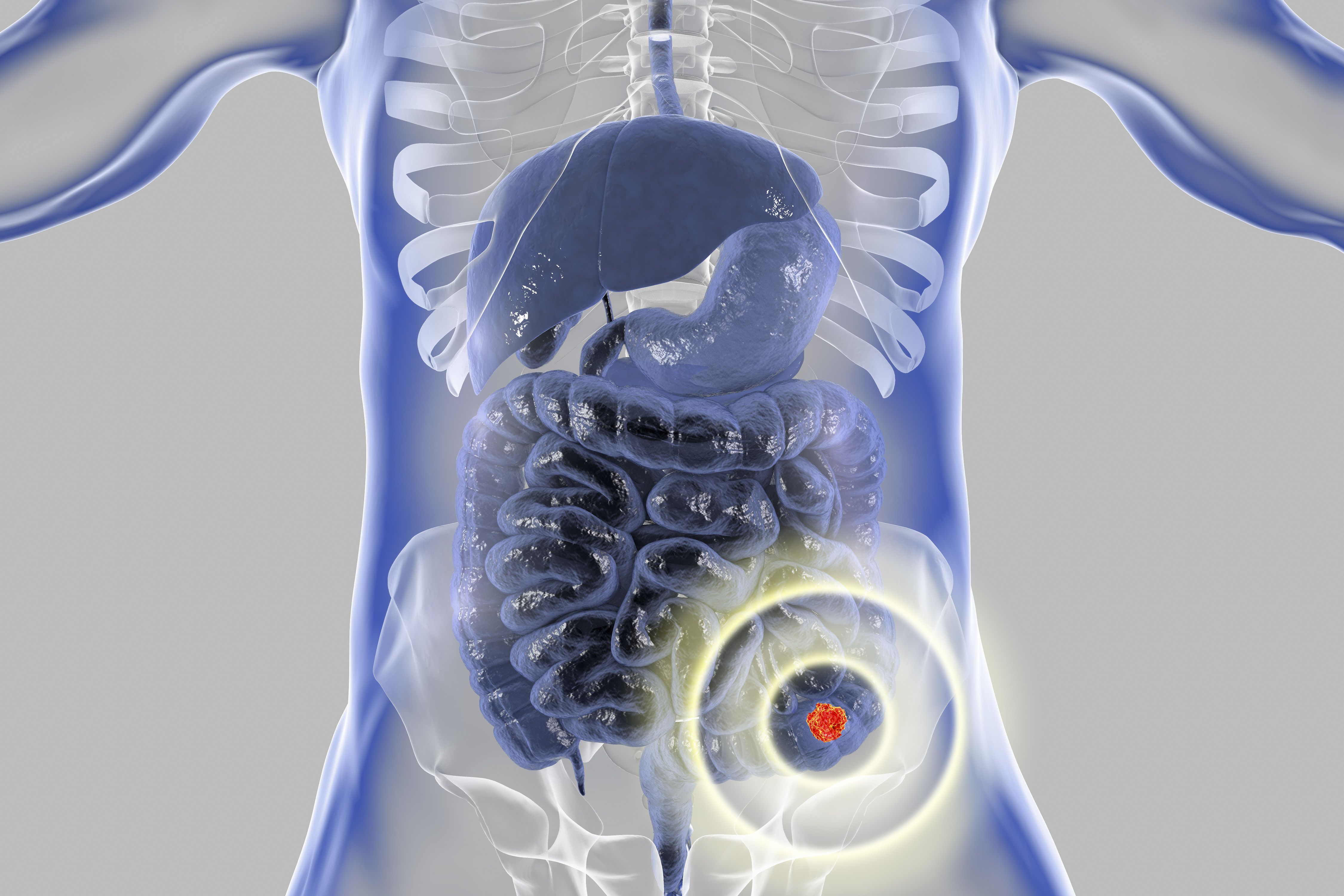
Nivolumab with ipilimumab elicited improvements to progression-free survival in patients with microsatellite instability–high colorectal cancer.

The FDA has granted accelerated approval to encorafenib in combination with cetuximab and mFOLFOX6 for patients with metastatic colorectal cancer with a BRAF V600E mutation, as detected by an FDA-approved test.

For patients with KRAS-mutated colorectal cancer, onvansertib plus FOLFIRI/bevacizumab was effective in those who had not received prior bevacizumab.

The CHMP recommended for approval nivolumab/ipilimumab for patients with MSI-H and dMMR unresectable or metastatic colorectal cancer.
The resubmission included an analysis of the phase 3 CARES-310 study, which reported favorable overall survival with the combination therapy in uHCC.
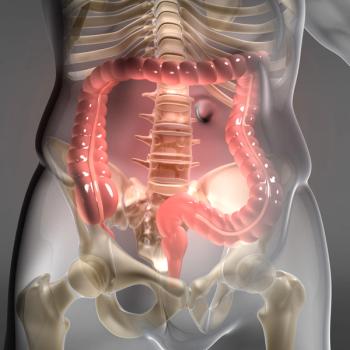
Data from the BLUE-C trial support the approval of the Cologuard Plus test for colorectal cancer screening among at-risk individuals.
Results from the INNATE trial showed the use of sotigalimab to be a safe and efficacious regimen for patients with rectal cancer.
The fixed-dose combination of favezelimab and pembrolizumab did not show an improvement in overall survival compared with the standard of care in patients with metastatic CRC.

The approval is based on results from the global phase 3 FRESCO-2 trial, which demonstrated improvement in OS in patients with refractory metastatic colorectal cancer.

NO-CUT trial data show that DRFS was maintained when non-operative management was used in patients with pMMR locally advanced rectal cancer.

Subgroup analysis in a phase 3 trial show OS benefits with the ramucirumab-based regimen in female patients and those with left-sided tumors.

Alessio Pigazzi, MD, PhD, FACS, FASCRS, provides advice for upcoming surgeons starting out in the colorectal cancer field.
Alessio Pigazzi, MD, PhD, FACS, FASCRS, discussed how robot-assisted surgery for colorectal cancers has evolved over the past 20 years.
Alessio Pigazzi, MD, PhD, FACS, FASCRS, discussed surgical and medical oncology developments in the colorectal cancer field.
Improved overall survival was also noted when atezolizumab plus bevacizumab and FOLFOXIRI were used to treat patients with pMMR tumors.

Panelists offer concluding perspectives on the future role of circulating tumor DNA in colorectal cancer management.
CytoDyn intends to submit its final study protocol to the FDA, engage a clinical research organization, and complete preparatory work to initiate the phase 2 trial.

Managing high-grade squamous intraepithelial lesions may reduce the risk of anal cancer based on data from the phase 3 ANCHOR trial.
Medical professionals analyze gaps in current colorectal cancer patient care, with a focus on minimal residual disease testing.
The panel examines challenges in interpreting circulating tumor DNA results and their impact on clinical decision-making processes.
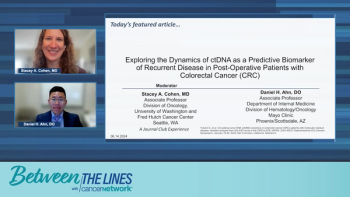
Stacey A. Cohen, MD, and Daniel H. Ahn, DO, share their key takeaways on the clinical utility of ctDNA in the treatment of patients with colorectal cancer.
Experts on colorectal cancer brainstorm ways to optimize clinical research on ctDNA and discuss patient perceptions of ctDNA testing.
Medical professionals explore methods for integrating circulating tumor DNA results with radiographic and pathologic findings to optimize patient care.
Advertisement
Advertisement
Trending on CancerNetwork
1
Modifiable Risk Factors Suggest Potential for Improving Cancer Prevention
2
2026 Tandem Meetings: What’s the Latest Research in Multiple Myeloma?
3
Dato-DXd Receives Priority Review in Unresectable/Metastatic TNBC
4
Barriers to CAR T-Cell Referral and Center Access in Multiple Myeloma
5