



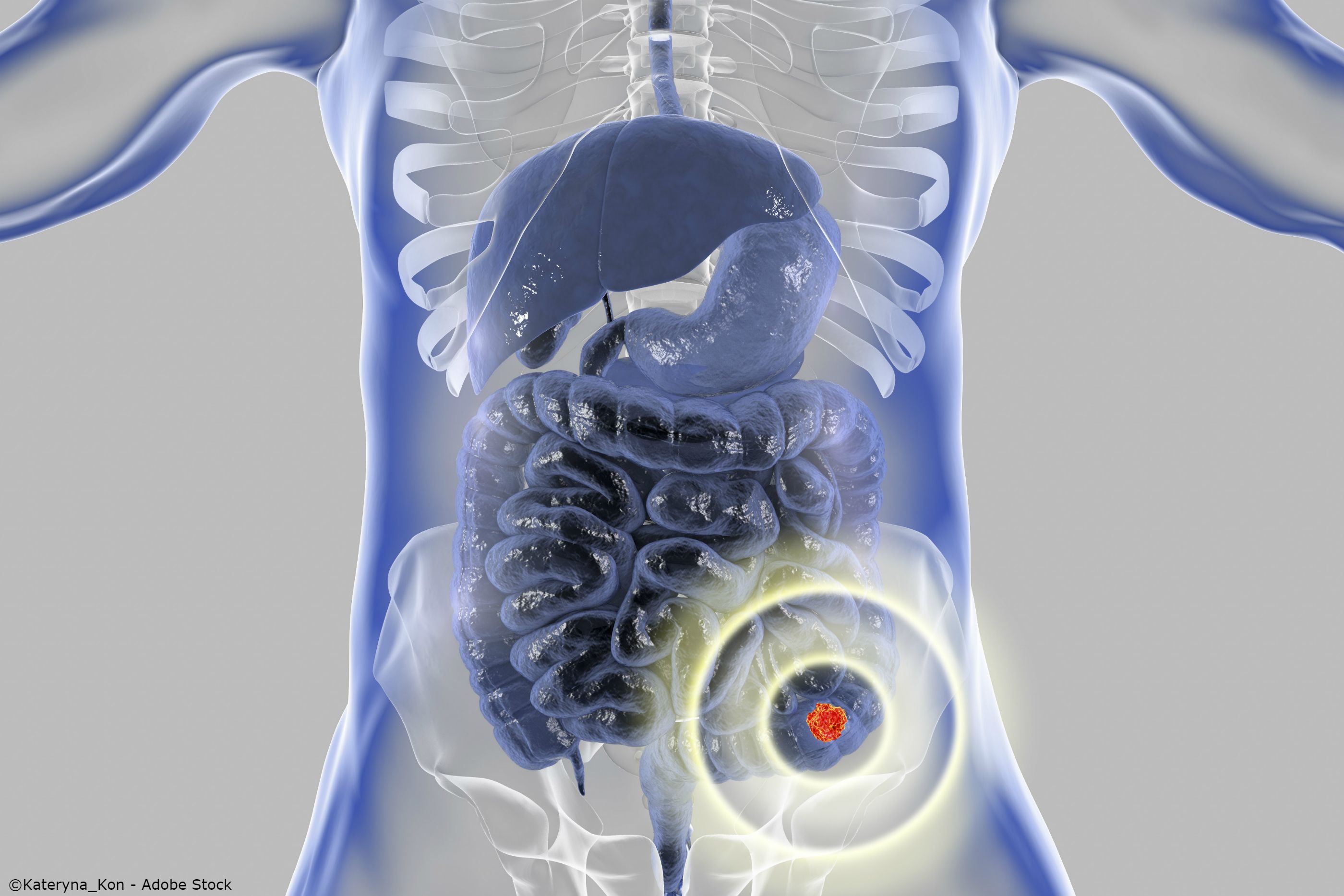


Colorectal Cancer
Latest News
Advertisement
Video Series




Latest Videos






Podcasts









CME Content































Advertisement
More News

Phase 2 CRDF-004 results revealed that adding onvansertib to chemotherapy/bevacizumab was well tolerated, with no unexpected toxicities observed.

Data from the phase 3 BEACON CRC trial support the approval of encorafenib plus cetuximab for this colorectal cancer population in China.

The FDA has waived the need for a botensilimab monotherapy arm in the phase 3 BATTMAN trial evaluating the combination in MSS metastatic colorectal cancer.

Subgroup data from BREAKWATER support cetuximab/encorafenib plus mFOLFOX6 as a new standard of care in BRAF V600E-mutated metastatic colorectal cancer.

The CHALLENGE trial in CRC studied structured exercise and demonstrated a DFS benefit comparable to or exceeding oxaliplatin chemotherapy.

Nicholas J. Hornstein, MD, PhD, highlighted results from the phase 3 ATOMIC and CHALLENGE trials in CRC presented at the 2025 ASCO Annual Meeting.

Data from part B of the DeFianCe study demonstrate a positive overall response rate trend with sirexatamab plus bevacizumab and chemotherapy.
Investigators will submit detailed results from the phase 3 STELLAR-303 trial for presentation at a future medical conference.

Aspirin led to a median disease-free survival of 1.16 years vs 1.35 years with placebo in patients with colorectal cancer liver metastases.
A retrospective analysis shows that trifluridine/tipiracil with or without bevacizumab given biweekly was favorable in those with colorectal cancer.
In patients 39 years or younger, a statistically significant association between colorectal cancer diagnosis and endometriosis was not observed.

Counseling received prior to colorectal surgery using 3-dimensional–printed anatomic models reduced mean anxiety scores vs conventional counseling.

As a single agent or in combination, MK-1084 showed promising efficacy and safety results for patients with KRAS G12C–mutated CRC.

Emergent alteration patterns were similarly diverse across treatment arms in the phase 3 CodeBreaK 300 study.

The median PFS was 54.1 months with nivolumab/ipilimumab vs 5.9 months with chemotherapy in patients with MSI-H/dMMR CRC.

Anlotinib/chemotherapy showed comparable efficacy vs bevacizumab/chemotherapy in patients with RAS/BRAF wild-type metastatic colorectal cancer.

Updated findings from BREAKWATER support encorafenib plus cetuximab and chemotherapy as a new standard of care in BRAF V600E-mutated metastatic CRC.
Among patients with rectal cancer who underwent total mesorectal excision following SCRT plus camrelizumab and chemotherapy, the 3-year OS rate was 93.3%.
For patients with right-sided CRC tumors, no significant progression-free survival difference was observed between the cetuximab and FOLFIRI-only groups.
At the time of analysis, the median progression-free survival was not reached with fruquintinib plus capecitabine in a phase 1/2 trial.
Patients with MSS tumors diagnosed with metastatic CRC did not experience enhanced OS outcomes with frontline ICI therapy compared with chemotherapy.
Results from the phase 3 CodeBreaK trial support the use of 960 mg of sotorasib plus panitumumab as standard of care in metastatic colorectal cancer.
Treatment-related adverse events of special interest occurred in 64.9% of patients who received fruquintinib and 23.0% of those who received placebo.

Although the overall incidence of colorectal adenocarcinoma is decreasing, the reduction is primarily associated with patients 55 years or older.
A phase 2 study found that treatment with tumor-infiltrating lymphocytes elicited a partial response rate of 15.1% in patients with gastrointestinal cancers.
Advertisement
Advertisement
Trending on CancerNetwork
1
Modifiable Risk Factors Suggest Potential for Improving Cancer Prevention
2
2026 Tandem Meetings: What’s the Latest Research in Multiple Myeloma?
3
Dato-DXd Receives Priority Review in Unresectable/Metastatic TNBC
4
Barriers to CAR T-Cell Referral and Center Access in Multiple Myeloma
5