



Multiple Myeloma
Latest News

Advertisement
Latest Videos

























































Advertisement
More News
Fredrik Schjesvold, MD, PhD, speaks about the FDA approval of melflufen in relapsed/refractory multiple myeloma and its next phase of development at the 2021 International Myeloma Workshop.

The latest episode of the ASTCT Talks features Rahul Banerjee, MD, on bone marrow transplant and CAR-T therapy.

Current techniques used to assess MRD status in patients with multiple myeloma, and advice to hematologist-oncologists who are considering flow cytometry or molecular testing.

Recommendations for measuring treatment response in patients with multiple myeloma utilizing tests such as MRD assessments.

Patients with newly diagnosed multiple myeloma experienced rapid responses and notable rates of minimal residual disease negativity following minimal residual disease–based consolidation therapy with daratumumab, carfilzomib, lenalidomide, and dexamethasone.

Patients with relapsed/refractory multiple myeloma who were treated with the recommended phase 2 dose of talquetamab experienced positive clinical activity.

Continued efficacy of CAR T-cell therapy with idecabtagene vicleucel in patients with pretreated myeloma is evidenced by updated KarMMa trial findings presented at the 18th International Myeloma Workshop.

The combination of melflufen plus dexamethasone produced a progression-free survival benefit over pomalidomide plus dexamethasone in patients with transplant-naïve relapsed/refractory multiple myeloma.

A population of patients with relapsed/refractory multiple myeloma who received elranatamab with or without lenalidomide experienced encouraging responses despite being heavily pretreated.
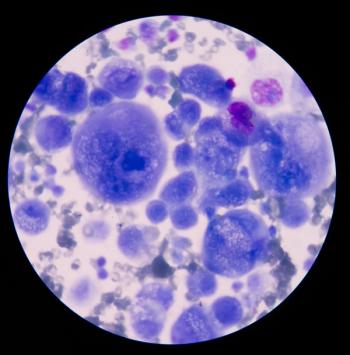
Ciltacabtagene autoleucel may provide patients with myeloma who have developed progressive disease a more long-term treatment option.

Strategies from the COVID-19 pandemic such as flexible, patient-focused approaches and telehealth may work to increase enrollment on clinical lung cancer trials by increasing accessibility.
Minimal residual disease negativity may predict outcomes for patients with multiple myeloma on maintenance therapy with lenalidomide who previously underwent autologous stem cell transplantation.
CancerNetwork® sat down with Larry Anderson, MD, PhD, at the 18th International Myeloma Workshop to talk about how the emergence of CAR T-cell therapies in multiple myeloma affects multidisciplinary clinicians.
Different markers and tests that are used to monitor disease status and treatment response in patients with multiple myeloma.

Findings from a phase 1/2 study indicated that patients with relapsed/refractory multiple myeloma who were treated with iberdomide plus dexamethasone and daratumumab/bortezomib or carfilzombib experienced promising efficacy and tolerable safety.
Patients with multiple myeloma with standard or high-risk cytogenic abnormalities who were treated with carfilzomib, lenalidomide, and dexamethasone plus autologous stem cell transplant experienced promising responses.
Updated results confirmed the safety and efficacy of the quadruplet regimen of fixed-dose isatuximab-irfcc in combination with bortezomib, lenalidomide, and dexamethasone for newly diagnosed multiple myeloma with no immediate intent for transplant.
The combination of daratumumab plus lenalidomide and dexamethasone demonstrated a significant overall survival benefit compared with lenalidomide and dexamethasone alone for patients with newly diagnosed multiple myeloma.
Kicking off a discussion regarding treatment approaches for transplant-ineligible multiple myeloma, a panel of hematologist-oncologists highlights goals of therapy for newly diagnosed patients.
Patients taking teclistamab for relapsed or refractory multiple myeloma saw durable response, and a well-tolerated toxicity profile.
Patients with relapsed or refractory multiple myeloma with or without t(11;14) experienced promising responses after being treated with venetoclax plus daratumumab and dexamethasone, as well as venetoclax plus daratumumab, dexamethasone, and bortezomib.
Researchers utilized a ctDNA assay to evaluate minimal residual disease in patients with multiple myeloma post-autologous stem cell transplantation.

The FDA granted a fast track designation for ALLO-605 based on its potential to treat patients with relapsed/refractory multiple myeloma who progressed on previous standard multiple myeloma therapies.
Early phase data indicate that elranatamab may be a safe and efficacious treatment for patients with relapsed/refractory multiple myeloma
Based on detrimental effects on overall survival, the FDA has issued a safety warning for melphalan flufenamide in relapsed multiple myeloma.
Advertisement
Advertisement
Trending on CancerNetwork
1
FDA Approves Daraxonrasib for Previously Treated Metastatic Pancreatic Cancer
2
How Significant is the Approval of Daraxonrasib in Pancreatic Cancer?
3
Biomarker-Independent ADC Rina-S Advances to Phase 3 in Endometrial Cancer
4
Where Do CELMoDs Fit With CAR T Cells and Bispecifics in Multiple Myeloma?
5