
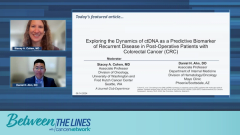
Opinion|Videos|July 15, 2024
Frequency of ctDNA Testing and Future Directions in Detecting MRD
Author(s)Stacey A. Cohen, MD, Daniel H. Ahn, DO
Experts on colorectal cancer share insights on optimizing the frequency of ctDNA detection and discuss potential ways to overcome challenges associated with MRD detection.
Advertisement
Episodes in this series
Advertisement
Related to this article

William A. Hall, MD, explains how fewer visits, no concurrent chemotherapy, and adaptive MRI guidance may have preserved quality of life with SBRT.

“We are not just treating the cancer; we are treating the patient,” said Marcio A. Fagundes, MD.

Poster presentations at IMS 2026 highlighted the use of venetoclax, daratumumab, and different combination regimens across various treatment settings.

Patient enrollment of the phase 3 IDeate-Lung02 trial assessing I-DXd vs chemotherapy in relapsed ES-SCLC will continue following the withdrawal.
Developers have resubmitted the biologics license application for tabelecleucel following feedback from a Type A meeting in April 2026.
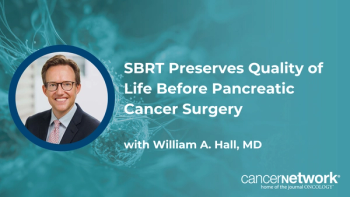
William A. Hall, MD, discussed how preoperative SBRT may serve as a platform for novel systemic therapies in pancreatic adenocarcinoma.
At 8 years, SBRT and radical prostatectomy had similar disease control in the PACE-A trial, with less urinary incontinence after SBRT.

Chih-Yi “Andy” Liao, MD, discusses early clinical data for KRAS G12C and G12D inhibitors in cholangiocarcinoma, noting that trials are just getting started.
Advertisement
Advertisement
Trending on CancerNetwork
1
Where Does Intensity-Modulated Proton Therapy Fit in Prostate Cancer?
2
FDA Discussion Prompts Voluntary Withdrawal of BLA for I-DXd in ES-SCLC
3
SBRT Matches Disease Control of Prostatectomy in Localized Prostate Cancer
4
Early Clinical Data Show KRAS Inhibitors Can Work in Cholangiocarcinoma
5