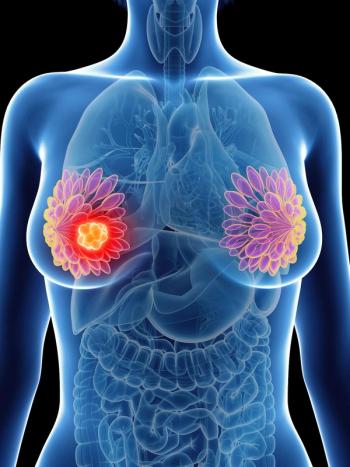
A statistically significant pCR rate was noted in patients with HER2+ breast cancer treated with anbenitamab injection and albumin-bound docetaxel.

Your AI-Trained Oncology Knowledge Connection!
Ariana Pelosci, managing editor for CancerNetwork® and the journal ONCOLOGY®, has been with the team since June 2021. She specializes in both web and print, and runs the social media accounts for CancerNetwork®.
She graduated from the University of Delaware, where she studied Media Communications and minored in journalism and marketing. At heart, she is a Jersey girl, and you can always find her down the shore during her free time.
Ariana loves to read, specifically historical or contemporary fiction. Follow Ariana on Twitter @APelosci or email her at apelosci@mjhlifesciences.com.
A statistically significant pCR rate was noted in patients with HER2+ breast cancer treated with anbenitamab injection and albumin-bound docetaxel.

The incidence rates of breast cancer and colorectal cancer have been on the rise in patients under 50 years for the past several years.

The SkinJect data set found about an 80% overall response rate for patients with nodular basal cell carcinoma receiving 200µg of doxorubicin microneedle array.

The latest clinical insights on endometrial cancer management were highlighted during a round table discussion.

Today the patient-physician relationship that Pergament et al outlined in 1999 is even more prevalent, driven by the rapid development, use, and uptake of social media across all oncology fronts.

Jesse Fann, MD, MPH, provided insights on the SCOPE trial, which evaluated technology-enhanced collaborative care for depression in patients undergoing active cancer treatment.
Erin Baurle, PsyD, discussed sleep-wake disturbances in patients with cancer and the efficacy of a CBT-I pilot program.
Persistent training and workflow gaps were listed as potential barriers of AYA care among oncologists.

In the non-HLA-A*02 arm of the FLAMINGO-1 trial, breast recurrence rates were less than 1% following treatment with GLSI-100.
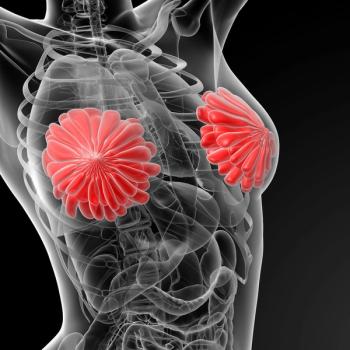
The primary end point of PFS was met in the phase 3 FOURLIGHT-1 trial assessing atirmociclib plus fulvestrant in patients with HR+/HER2– breast cancer.

Gary L. Clayman, DMD, MD, FACS, discussed evaluating the link between GLP-1 receptor agonists and thyroid cancer.

Arms 7 and 8 of the BEGONIA trial showed comparable outcomes for patients with different PD-L1 expression when receiving dato-DXd/durvalumab for TNBC.

A total of 46.6% of patients showed a favorable response to ultrahypofractionation radiotherapy for locally advanced breast cancer.

A clinical clearance rate of 73% was noted among patients with basal cell carcinoma receiving 200 ug of doxorubicin microneedle array.
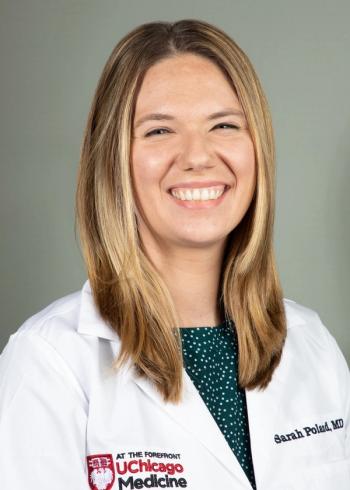
Sarah Poland, MD, discussed the landscape of immunotherapy in breast cancer, including clinical trial data, the rise of ADCs, and strategies for managing AEs.

A predetermined change control plan was authorized as part of the premarket approval, allowing for AI enhancements without the need for FDA oversight.
The EGFR/HER3 bispecific ADC met the primary end points of PFS and OS in patients with advanced triple-negative breast cancer.

Results from the BREAKWATER trial led to the traditional approval of encorafenib plus cetuximab and fluorouracil-based chemotherapy in BRAF-mutated CRC.
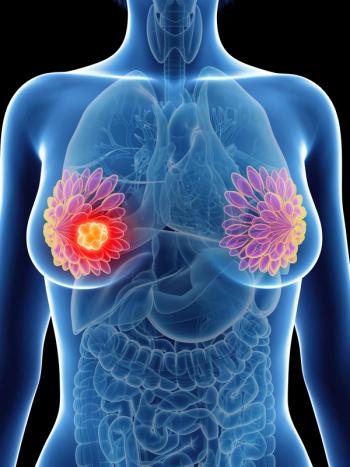
A novel agent in combination with olaparib has been granted fast track designation by the FDA for germline BRCA-mutated HER2-negative locally advanced or metastatic breast cancer.
A Prescription Drug User Fee Act date of December 18, 2026, has been set for giredestrant plus everolimus in ER+, HER2–, ESR1-mutated breast cancer.

Fumiko Chino, MD, discussed the nuances of patient-centered care, addressing financial toxicity, AI bias in oncology, and survivorship.

Researchers analyzed postoperative complications and survival outcomes in patients with melanoma who underwent therapeutic lymph node dissection.
Since 2003, breast cancer has been one of the black box warnings associated with hormone replacement therapy for women experiencing menopause.

Julie M. Vose, MD, MBA, details insights from the Mantle Cell Lymphoma Scientific Consortium and Workshop, focusing on global clinical trial collaboration and sequencing BTK/BCL-2 inhibitors.
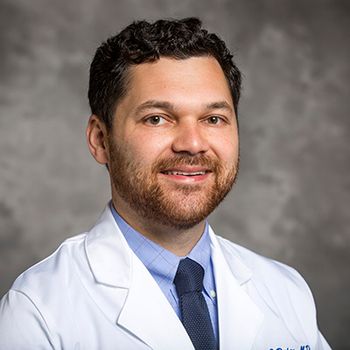
Sunil W. Dutta, MD, discussed hypofractionation in breast reconstruction and why clinical follow up remains a key "soft skill" in an AI-driven field.
Aminolevulinic acid plus red lamp therapy was given an sNDA by the FDA for the treatment of superficial basal cell carcinoma.

Emily Papai, MD, discussed her study on RECIST responses to neoadjuvant radiation in retroperitoneal sarcoma and the challenges of organ-sparing surgery.
Data from the KEYNOTE-B96 trial support the FDA approval of the pembrolizumab regimen in these gynecologic malignancies.

Deb Schrag, MD, MPH, discusses her journey into GI oncology, the development of patient-reported outcome systems, and her vision for the upcoming ASCO presidency.

OS and PFS rates were positive as demonstrated by real-world data in patients given SBRT for oligometastatic ovarian cancer.

Published: January 24th 2025 | Updated: February 6th 2025