





Prostate Cancer
Latest News
Advertisement
Latest Videos



CME Content































Advertisement
More News

An expert examines sequencing strategies for the treatment of metastatic prostate cancer.

Dr Aaron Berger shares updated safety data on next-generation androgen receptor inhibitors and impact of safety profile on treatment selection in nmCRPC.
Aaron Berger, MD, discusses adverse events with enzalutamide, apalutamide and darolutamide and their management.

Prostate cancer experts review the use of PSMA PET/CT imaging and Axumin imaging for patients with metastatic castration-resistant prostate cancer.

Raoul S. Concepcion, MD, presents the case of a 64-year-old-man with mCRPC, and Jason M. Hafron, MD, CMO, leads the discussion on the optimal treatment approach for the given case.
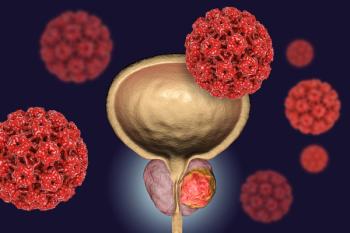
Men with localized prostate cancer were most likely to select treatment with radiotherapy over surgery and its associated adverse effects.
Daniel P. Petrylak, MD, leads the discussion on approaching treatment of high-volume metastatic castration-naïve prostate cancer.
A panel of experts in prostate cancer examine the use of conventional imaging and PSMA PET/CT and the impact on their approach to the management of mCNPC.

A prostate cancer expert reviews trial design and efficacy data with next-generation androgen receptor inhibitors.
Dr Aaron Berger discusses systemic therapy options, treatment selection and monitoring for patients with nonmetastatic castrate-resistant prostate cancer (nmCRPC).
Dr Morgans discusses how patient access impacts treating metastatic prostate cancer.
Alicia Morgans, MD, MPH, mentions other factors clinicians need to consider before adding PARP inhibitors to metastatic prostate cancer therapy.

Dr Raoul S. Concepcion presents the case of a 69-year-old man with metastatic castration-naïve prostate cancer (mCNPC), and the panel shares their personal approaches to treatment.
Raoul S. Concepcion, MD, FACS, poses polling questions for the audience’s medical specialty and the percent of patients they receive with prostate cancer.

The aim of this meta-analysis is to analyze the efficacy of these drugs in the treatment of mCRPC in terms of progression-free survival (PFS) and overall survival (OS), using the results of completed trials.

Brian T. Helfand, MD, PhD, and Steven E. Finkelstein, MD, discuss the potential of 18F-fluciclovine PET/CT to guide prostate cancer decision-making.

PSA testing rates for prostate cancer increased among men after the US Preventive Services Task Force released updated guidance in 2017 that reversed the recommendations from previous guidance in 2012.
An expert explains PARP inhibitor use in the metastatic prostate cancer treatment landscape and typical adverse events seen during therapies.
Alicia Morgans, MD, MPH, discusses how to select the best treatment for patients with metastatic prostate cancer and the importance of monitoring them while on therapy.

Investigators noted evident racial and ethnic disparities among patients with high prostate-specific antigen levels who received subsequent prostate MRI imaging.

The utilization of 68Ga-PSMA-11 PET allowed for positive sensitivity and specificity scores for patients with intermediate to high-risk prostate cancer following radical prostatectomy and lymph node dissection.

The recent episode of the "Oncology Peer Review On-The-Go" podcast features Alexandra Sokolova, MD, discussing her article on germline testing and NCCN guidelines for patients with prostate cancer.
Dr Morgans examines systemic treatment options for patients with metastatic castration-resistant prostate cancer.
An expert considers the role of BRCA1/2 mutations in metastatic prostate cancer.

Research from an observational study suggests it will take time for sexual satisfaction scores to improve among patients with erectile dysfunction due to robot-assisted radical prostatectomy for localized prostate cancer.
Advertisement
Advertisement
Trending on CancerNetwork
1
Modifiable Risk Factors Suggest Potential for Improving Cancer Prevention
2
Dato-DXd Receives Priority Review in Unresectable/Metastatic TNBC
3
2026 Tandem Meetings: What’s the Latest Research in Multiple Myeloma?
4
Barriers to CAR T-Cell Referral and Center Access in Multiple Myeloma
5