





Prostate Cancer
Latest News
Advertisement
Latest Videos




CME Content































Advertisement
More News
Certain patients with metastatic castration-resistant prostate cancer may have favorable outcomes after receiving nivolumab plus rucaparib.

Durable objective responses coupled with an acceptable safety profile were reported for sabizabulin in patients with metastatic castration-resistant prostate cancer at 2021 ESMO.
Results of the phase 2 SAKK 08/16 trial indicate a benefit to switching to darolutamide maintenance following prior therapies for metastatic castration-resistant prostate cancer.
The combination of abiraterone acetate and prednisolone plus androgen deprivation therapy showed a statistically significant improvement in survival outcomes for patients with nonmetastatic high-risk prostate cancer.
Atezolizumab plus cabozantinib showed significant activity for patients with high-risk metastatic castration-resistant prostate cancer.
Patients with metastatic castration-resistant prostate cancer experienced an improvement in prostate-specific antigen following treatment with pembrolizumab and olaparib.
Notable declines in prostate-specific antigen levels were seen in patients with castration-resistant prostate cancer who received olaparib coupled with bipolar androgen therapy.
An analysis of patients with prostate cancer treated with immune checkpoint blockade indicated that microsatellite instability and mismatch repair may be indicative of response.
Results from the phase 2 ODEZA trial comparing patient preference of antiandrogen agents indicates benefits of darolutamide over enzalutamide in terms of certain cognitive functions in men with metastatic castration-resistant prostate cancer.
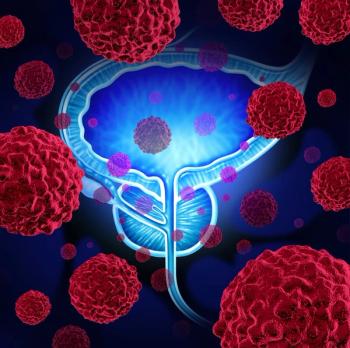
Promising responses seen with the combination of pembrolizumab and olaparib in a cohort of patients with metastatic castration-resistant prostate cancer has led to the initiation of a phase 3 trial.
This study investigated the biomarker potential of glutamine among known prognostic variables in localized prostate cancer.
Brian Helfand, MD, PhD, and Steven Finkelstein, MD, FACRO, review results from the phase 2/3 EMPIRE-1 trial examining the use of ¹⁸F-fluciclovine-PET/CT imaging to guide postprostatectomy salvage radiotherapy for prostate cancer.
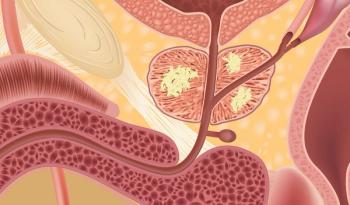
Genomic classifier scores and basal-luminal subtypes may be biomarkers of response for patients with nonmetastatic castration-resistant prostate cancer treated with apalutamide plus androgen deprivation therapy.
Preliminary findings indicate that P-PSMA-101, a CAR T-cell therapy, may be efficacious in patient with metastatic castration-resistant prostate cancer.

High intensity interval training yielded decreased prostate-specific antigen levels and velocity, as well as lowering prostate cell growth in men with localized prostate cancer.

Geriatric patients with prostate cancer did not experience a decline in cognative function regardless of treatment.
A pooled analysis of 3 randomized trials highlight the potential benefit of utilizing androgen receptor inhibitors in men aged 80 years or older with non-metastatic castration-resistant prostate cancer.
The use of metastasis-free survival as an end point for clinical trials in nonmetastatic castration-resistant prostate cancer has been given finalized guidance by the FDA.
Black veterans within the United States who could stand to highly benefit from definitive treatment were found to be less likely to undergo treatment than non-Black populations.

Judd Moul, MD, discusses the gravity of new data on systemic therapies for men with castration-resistant prostate cancer and how they can be of use during the COVID-19 pandemic.

CancerNetwork® sat down with Edmund Qiao at the 2021 American Society of Clinical Oncology Annual Meeting to talk about prostate-specific antigen screening and prostate cancer prevention in African American men.
Men diagnosed with mCPRC who are treated with 117Lu-PSMA may be assessed using nomograms to help predict outcomes.
Adjuvant radiation therapy, when compared with early salvage radiation therapy, reduced the risk of all-cause mortality for patients with adverse pathology at radical prostatectomy.
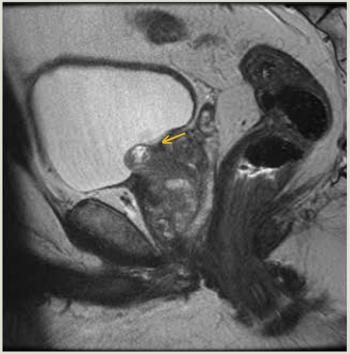
This is the case of a man, aged 56 years, who presented with urinary intermittency, frequency, urgency, and dysuria 5 months after undergoing focal laser ablation (FLA) of Gleason 3 + 4 = 7 prostate cancer (PC).

During a discussion at 2021 ASCO, Neal D. Shore, MD, said he was most excited to see data from the phase 3 VISION trial of lutetium-177-PSMA-617 in metastatic castration-resistant prostate cancer.
Advertisement
Advertisement
Trending on CancerNetwork
1
Modifiable Risk Factors Suggest Potential for Improving Cancer Prevention
2
Dato-DXd Receives Priority Review in Unresectable/Metastatic TNBC
3
2026 Tandem Meetings: What’s the Latest Research in Multiple Myeloma?
4
Outlining Advances in AI For Breast Cancer Screening/Radiomics
5