

News|Articles|February 20, 2026
- ONCOLOGY Vol 40, Issue 1
- Volume 40
- Issue 01
MCL Workshop Proves Essential for Moving the Needle Forward in Research
Author(s)ONCOLOGY Staff
Fact checked by: Justin Mancini
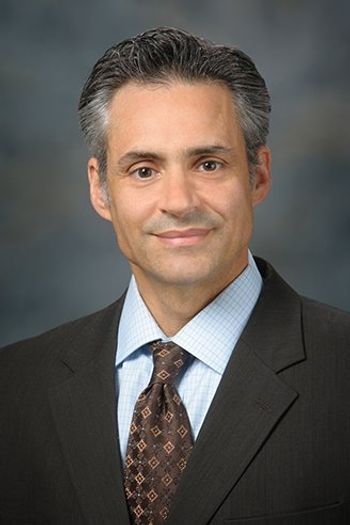
Peter Martin, MD, focused on the collaborative meeting setting and where the MCL research field is headed.
Advertisement
During the 2025 Mantle Cell Lymphoma Scientific Consortium and Workshop hosted by the Lymphoma Research Foundation, experts from around the world gathered to discuss this rare disease. As this meeting occurs every 2 years, updates in the field were highlighted as well as unmet needs and future direction.
ONCOLOGY® spoke with Peter Martin, MD, codirector of the Hematology Program at New York University Langone Health, who participated in the workshop. As mantle cell lymphoma (MCL) is a rare disease, having workshops dedicated to this space alone is imperative for moving the needle forward. Martin focused on highlights from the meeting and some of the biggest takeaways.
ONCOLOGY: Are you able to give some background on the MCL workshop?
Martin: The Lymphoma Research Foundation started the Mantle Cell Lymphoma Consortium about 20 years ago, with the goal of bringing together a number of international experts in mantle cell lymphoma, who at that time were receiving funding from the Lymphoma Research Foundation to study mantle cell lymphoma and improve outcomes for [patients]. Over time, there was an increasing interest from the global lymphoma community to attend some of the meetings that these funded lymphoma researchers were attending, and that attention grew to the point where it made a lot of sense to have a regular meeting currently, every 2 years, where roughly 100 to 250 devoted mantle cell lymphoma researchers from around the world are brought together to discuss some of the most pressing issues of the day in mantle cell lymphoma.
What was the highlight from this event?
There were probably 3 highlights in my mind, but I think you could ask any one of the 100 people who attended and get some different answers. This was widely recognized as being a very successful event, which means that everybody got something out of it. I personally enjoyed a lot of sessions on drug resistance. The BTK [Bruton tyrosine kinase] inhibitors have become a standard in mantle cell lymphoma, not only in the relapsed/refractory setting but also now in the frontline setting, and increasingly, there’s interest in trying to figure out why [patients] become resistant to them and what can be done to overcome some of that resistance. We think that a lot of the resistance that occurs in mantle cell lymphoma is unique to mantle cell lymphoma and distinct from chronic lymphocytic leukemia or Waldenström macroglobulinemia, for example.
There were several sessions on drug resistance. I thought that was important and very forward-thinking. We’re going to need to know the answers to that in the future. Another session that I thought was important was chaired by Andrew D. Zelenetz, MD, PhD, on minimal residual disease, or measurable residual disease, and [the] increasing role that’s likely to play in the future, broadly in lymphoma but specifically in mantle cell lymphoma, as potential response assessment tool but also potentially as a surveillance tool in the future. Importantly, that discussion took place in [the] presence of the European Medicines Agency. Having regulatory bodies there to be part of that was nice. Lastly, there was a fruitful discussion led by Kami Maddocks, MD, on what we’re currently calling high-risk mantle cell lymphoma, which is maybe a little bit heterogeneous, but there are some features that are clearly associated with high-risk mantle cell lymphoma. [Patients] with mantle cell lymphoma do represent an unmet need currently, as outcomes have consistently improved across the board. For mantle cell lymphoma, [patients] with higher-risk mantle cell lymphoma have seen their outcomes improve but maybe not to the same degree as other people. We all recognize we need to devote a little bit more attention to this group, and how do you define it? What does that mean? I think [those] are important questions.
What is the importance of having a collaborative meeting?
We have several meetings in lymphoma around the world every year. The American Society of Hematology, American Society of Clinical Oncology, European Hematology Association, etc—all these meetings are with the intention of discussing lymphoma in general. When we attend these meetings, our attention is split in multiple different directions, and very often, there’s a real clinical track or a scientific track with little interaction between the clinicians and scientists. The mantle cell lymphoma [workshop] is unique because virtually all the attendees, from the most basic scientists to the most clinical researchers, attend the meeting together. Two solid days of collaborative discussion focused solely on mantle cell lymphoma. That’s why you see a number of discoveries, collaborations, [and] productivity coming out of this meeting over the past 2 decades. There’s a nice publication and discovery history, and we’re going to keep seeing that in the future.
What are the most pressing unmet needs in mantle cell lymphoma that current clinical trials are aiming to address?
They’re important questions. Every single person with mantle cell lymphoma faces some issues that are similar and some issues that are unique. Because of the paradigm shifts that we’re in the middle of right now, witnessing in mantle cell lymphoma gives us the opportunity to design a lot of different clinical trials to address all these things. You could argue that the biggest unmet need is this high-risk population. There are some clinical trials looking at more intensive induction strategies, both with and without chemotherapy, but also adding consolidation strategies, including CAR [chimeric antigen receptor] T cells or bispecific antibodies. We’re also seeing that there is a population of people with less risky mantle cell lymphoma who might be able to benefit from less intensive, potentially time-limited therapies. We’re seeing the development of strategies for people who have had mantle cell lymphoma for a while, and it’s come back after prior therapies. If you’re the person who has that situation, that’s the most important question. We’re at a historic time in the history of lymphoma, to be able to have so many tools to answer all these questions.
Looking at the evolving treatment landscape, particularly with the advent of novel agents, how are you currently approaching frontline treatment decisions for fit or transplant-eligible patients with MCL?
The first question that comes out of that question is, what is the role of autologous stem cell transplant? That’s still to some degree debatable. That phase 3 TRIANGLE trial (NCT02858258) that was reported by the European Mantle Cell Lymphoma Network, maybe preliminarily, suggests that autologous stem cell transplant may not be necessary in younger patients who are treated with an intensive induction in combination with BTK inhibitor, with maintenance of a BTK inhibitor and rituximab [Rituxan] in particular, but there may be some patients who still do benefit from an autologous stem cell transplant. There was an unexpected trend toward improved outcomes in [patients] with the higher-risk version of mantle cell lymphoma, which is maybe contrary to what we would normally expect. Is there a role for stem cell transplant or not? Probably, for most [patients]. For a subset of [patients] with high-risk mantle cell lymphoma, potentially. The question that follows that is, what are the subsequent lines of therapy that we’re using, and is it possible that earlier use of CAR T cells or bispecific antibodies, for example, might be more appropriate than a superintensive strategy that then makes a second-line therapy more difficult? These are good questions for the future.
Another question for the future will be, is there a role for chemotherapy at all? We know that outcomes with chemotherapy and BTK inhibitors combined in these younger, fitter patients are excellent. Is it possible that some [patients] don’t need chemotherapy? That may be true. We’ve seen several phase 1 and phase 2 trials that have suggested that these nontraditional cytotoxic chemotherapy-containing regimens can be very successful. We’ve seen in an older population that a nonchemotherapy regimen can be as good as a chemotherapy regimen, depending on how you define good. There’s a scenario where these nonchemotherapy regimens may replace traditional cytotoxic chemotherapy.
Looking at patients who have experienced relapse after initial BTK inhibitor therapy, what are some preferred treatment strategies for sequencing subsequent lines of treatment?
All the data we have currently for previously treated mantle cell lymphoma are with BTK inhibitors in [patients] who have not received a prior BTK inhibitor. As we start to move BTK inhibitors from subsequent lines of therapy into the initial line of therapy, it leaves open this whole [set] of questions of, what do you do afterward? There are a couple of different scenarios. One is a scenario where [a patient] gets a BTK inhibitor, they’ve responded well, and the intention was to stop it, to limit the exposure to the treatment and the [adverse] effects. We can assume that a re-treatment strategy should be considered again with a BTK inhibitor that was initially successful, either alone or in combination. There are data that suggest that a BTK inhibitor plus a BCL2 inhibitor can, in some ways, be superior to a BTK inhibitor alone. The other question, though, is what to do in the setting of somebody who has received a BTK inhibitor and has been on it and has progressed in the context of that BTK inhibitor? Right now, it’s a bit of a guess and an extrapolation of data. If that were to happen in a second or third line of therapy–type setting, we would then move on to use CAR T cells. That would certainly be a consideration. Whether bispecific antibody should factor in there is another question. If [a patient] hasn’t received any chemotherapy, that’s an unknown. If somebody just gets a BTK inhibitor without chemotherapy, should there be a consideration for chemotherapy? We don’t have data there, so I don’t think I can answer that question. It's a good one, though.
What are some key factors you weigh when considering combination therapies vs a monotherapy for MCL, and how do you help balance the efficacy with potential toxicities in personalized treatment plans?
Referring specifically to BTK inhibitors in the relapsed/refractory setting, they’re currently approved as monotherapies in the frontline setting. It’s only approved, in the context of the phase 3 ECHO trial NCT02972840, in combination with bendamustine and rituximab. If we’re talking about them in the relapsed/refractory setting, they’re approved as-is monotherapies. We’ve seen a number of clinical trials that have combined BTK inhibitors with a bunch of different agents: anti-CD20 antibodies, BCL2 inhibitors, proteasome inhibitors, CDK4 inhibitors. I’m sure there are others as well. Among these, the only one that has randomized data is the combination of ibrutinib [Imbruvica] with venetoclax [Venclexta] vs ibrutinib alone. That one did produce a progression-free survival [PFS] benefit without an overall survival benefit. That strategy is potentially appropriate, but it must be discussed. What are the pros and cons? We’re adding more [adverse] effects when we add additional agents, and you’re adding them for a longer period if you’re improving the PFS. That needs to be considered. Certainly, [for] somebody with more risk factors, or higher-risk mantle cell lymphoma, you can make the justification that more is needed in those settings. [For a patient] with a less aggressive version of relapsed mantle cell lymphoma, maybe after some 10-year remission from prior therapy, you could potentially argue for monotherapy, although I’m sure over time, we’ll start to see more combination therapies in that setting, and hopefully, some of those combinations will be data driven based on some understanding of the mantle cell lymphoma biology, whether that’s related to proliferation or tumor microenvironment or some of the genetic mutations that we’re seeing as potential mitigators of resistance. Hopefully, that’s the thing that guides combination strategies in the future.
Articles in this issue
about 1 month ago
3 Things You Should Know About Identifying SCLC-LEMSabout 1 month ago
How to Move the Needle in Defining High-Risk MCL?about 1 month ago
The MCL Consortium Promotes Growth in Mantle Cell Lymphoma Researchabout 1 month ago
MCL Workshop Tackles Tough Issues Facing Rare Lymphoma Subtypeabout 2 months ago
When Words Fall Short: A Lesson in Silence and Compassionabout 2 months ago
Advances in Immunotherapy for Breast CancerNewsletter
Stay up to date on recent advances in the multidisciplinary approach to cancer.
Advertisement
Related Content
Advertisement


Latest CME









































Advertisement
Advertisement
Trending on CancerNetwork
1
CAR-T Moves to the Front Line: Rethinking the Multiple Myeloma Sequence
2
Anbenitamab Injection Combo Meets pCR End Point in HER2+ Breast Cancer
3
Urine-Based Biopsy Shows 97.8% Sensitivity in Prostate Cancer Detection
4
FDA Approves Brexucabtagene Autoleucel in Adult R/R MCL
5