























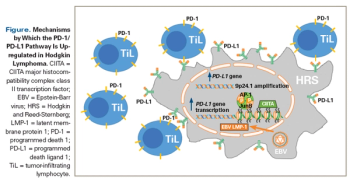
In this article we review the scientific rationale, preclinical evidence, and most recent clinical data for the use of checkpoint inhibitor therapy in patients with relapsed Hodgkin lymphoma.

Your AI-Trained Oncology Knowledge Connection!
In this article we review the scientific rationale, preclinical evidence, and most recent clinical data for the use of checkpoint inhibitor therapy in patients with relapsed Hodgkin lymphoma.
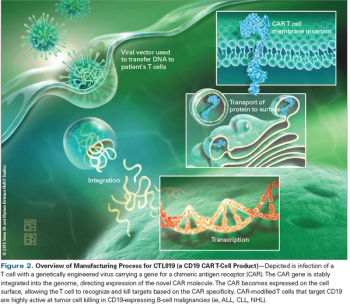
In this review, we will describe the mechanism of action of CAR T cells, discuss outcomes of current clinical trials, and highlight emerging directions for this exciting approach to cancer treatment.
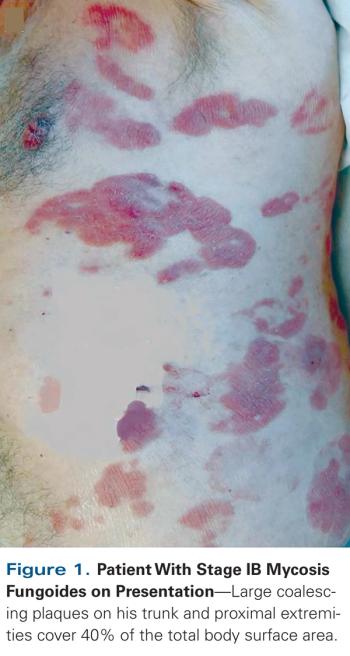
An 80-year-old man presented with a disabling pruritic rash characterized by disseminated and coalescing plaques on the trunk and proximal extremities and covering 40% of his total body surface area, without peripheral lymphadenopathy.

Ultimately, the management goal is not for patients with relapsed/refractory disease to live with chronic Hodgkin lymphoma while receiving immune checkpoint blockade therapy, but rather to cure more patients with first- or second-line therapy.
Identification of effective lymphodepletion strategies, optimization of patient selection, and management of novel toxicities remain challenges in the growing field of cellular immunotherapy.
Several FDA-approved anti-malarial and anti-fungal drugs might be able to overcome a previously unexploited mechanism that allows some leukemia cells to escape programmed cell death.

Several anti-malarial and anti-fungal drugs might be able to overcome a previously unexploited mechanism that allows some leukemia cells to escape programmed cell death.
A supplemental New Drug Application has been submitted to the US Food and Drug Administration for marginal zone lymphoma (MZL), and if approved, ibrutinib (Imbruvica) will be the first therapy specifically approved for patients with MZL.
It turns out that CAR T cells can do more than directly attack cancer cells. They can be used as “micro-pharmacies” for precise therapeutic delivery in B-cell lymphomas.
Development of targeted therapies for acute myeloid leukemia (AML) represents an ongoing challenge for the field. There is substantial promise, however, in several different approaches to targeted AML therapy, including IDH inhibitors, FLT3 inhibitors, and others.
The STIM1 study shows that patients with chronic myeloid leukemia who have undetectable minimal residual disease can safely discontinue imatinib therapy.
Clinicians and patients now have several options for frontline management of chronic lymphocytic leukemia; exactly which option is preferred remains up for debate.
The 5-year survival rate for relapsed/refractory acute lymphoblastic leukemia has been below 10%. Immunotherapies, however, are starting to challenge that paradigm.
Because of the high cure rate in early-stage classical Hodgkin lymphoma, reducing toxicity is a primary concern. One idea for doing so is a subject of ongoing research: is elimination of all radiotherapy in many of these patients a possibility?

In this interview we discuss the different types of T-cell lymphomas and how supportive care is used in the management of these malignancies.
Phase II data provide further evidence that patients with relapsed/refractory chronic lymphocytic leukemia with 17p deletion have a new treatment option with ibrutinib.
The monoclonal antibody rituximab (Rituxan) improves event-free survival (EFS) among adults with CD20-positive B-cell acute lymphoblastic leukemia (ALL), according to authors of a phase III clinical trial conducted in France and Switzerland.
The combination of dasatinib (Sprycel) and venetoclax (Venclexta) may have the potential to improve the treatment of Philadelphia chromosome-positive acute lymphoblastic leukemia (Ph+ALL), according to Oregon researchers.
A study found that the protein EZH2 is required for chronic myeloid leukemia initiating cells to survive. Inhibiting EZH2 could improve outcomes in TKI-resistant disease.
Patients with Hodgkin lymphoma have a high incidence of severe acute and persistent fatigue, regardless of their tumor stage or the treatment method chosen for their disease.
This review discusses the mechanisms of action, clinical development, and emerging applications of small-molecule inhibitors that target B-cell receptor signaling pathways, B-cell lymphoma-2 inhibitors, selective inhibitors of nuclear export, and epigenetic modifiers.
Prior to the advent of targeted therapies, there were few options other than chemotherapy for the treatment of patients with indolent B-cell lymphomas or chronic lymphocytic leukemia.
Combining venetoclax (Venclexta, AbbVie and Genentech) plus a tyrosine kinase inhibitor targeting the BCR-ABL oncogene can eradicate chronic myeloid leukemia stem cells in a mouse model of the disease.
Use of lenalidomide monotherapy in patients with adult T-cell leukemia/lymphoma resulted in clinically meaningful antitumor activity, with 42% of phase II trial participants having objective responses.
Many adolescent girls with leukemia did not receive pregnancy screening before undergoing teratogenic exposure.