

Patients with relapsed or refractory multiple myeloma may benefit from treatment with teclistamab, for which a biologics license application was submitted to the FDA.

Your AI-Trained Oncology Knowledge Connection!

Ariana Pelosci, managing editor for CancerNetwork® and the journal ONCOLOGY®, has been with the team since June 2021. She specializes in both web and print, and runs the social media accounts for CancerNetwork®.
She graduated from the University of Delaware, where she studied Media Communications and minored in journalism and marketing. At heart, she is a Jersey girl, and you can always find her down the shore during her free time.
Ariana loves to read, specifically historical or contemporary fiction. Follow Ariana on Twitter @APelosci or email her at apelosci@mjhlifesciences.com.
Patients with relapsed or refractory multiple myeloma may benefit from treatment with teclistamab, for which a biologics license application was submitted to the FDA.

The combination of nivolumab plus ipilimumab demonstrated a survival benefit among patients with active melanoma and brain metastases.

A longer treatment-free survival was seen in patients with advanced renal cell carcinoma who were treated with first-line nivolumab and ipilimumab compared with sunitinib.

An interim analysis demonstrated positive efficacy and safety in patients with metastatic solid tumors who were treated with etigilimab plus nivolumab.

Black and Hispanic patients continue to be notably underrepresented in clinical cancer research, although research noted that participation is on the rise.

Early relapsed appears to be an important predictor of survival among patients with mantle cell lymphoma.

Although findings suggest that close or positive surgical margins are associated with a higher risk of poor outcomes in salivary gland cancer, it did not appear to be an independent factor for poor outcomes after adjusting for tumor stage, histologic risk group, and adjuvant radiotherapy use.

Philip S. Low, PhD, discusses the obstacles he overcame while creating pafolacianine and what other cancers he hopes will be improved with the use of this agent.

Patients with advanced rectal cancer who were treated with up-front chemoradiotherapy plus consolidation chemotherapy experienced an improvement in pathological complete response without impacting disease-free survival.

Paolo Tarantino, MD, hosted a Twitter Takeover during the San Antonio Breast Cancer Symposium where he discussed abstract presentations and key takeaways in a #CNRealTimeReport.

NUV-422 has demonstrated favorable blood-brain barrier penetration in patients with high-grade gliomas.
Elderly patients treated with ibrutinib-containing regimens for chronic lymphocytic leukemia saw a progression-free survival benefit vs those who received rituximab and bendamustine.

A study presented at 2021 ASH found that costs and time spent managing adverse effects varied significantly in patients with chronic lymphocytic leukemia who were being treated with acalabrutinib, ibrutinib, and venetoclax.
Patients receiving daratumumab, lenalidomide, and dexamethasone in the first line saw better overall survival than those who waited and received second-line daratumumab-based regimens for transplant-ineligible newly diagnosed multiple myeloma.

The anti-TIGIT therapy tiragolumab administered in combination with atezolizumab showed clinically meaningful improvement at the 2.5-year follow-up vs atezolizumab alone for patients with PD-L1–positive metastatic non–small cell lung cancer.

A phase 3 trial analysis found that metformin does not improve invasive disease-free survival or overall survival rates for patients, regardless of hormone receptor status.
Patients with newly diagnosed glioblastoma who were treated with paxalisib saw positive efficacy and safety results.
A United States indication for duvelisib in previously treated relapsed/refractory follicular lymphoma has been voluntarily withdrawn by developer Secura Bio following an assessment of the drug and subsequent consultation with the FDA.

The use of alectinib to treat ALK-positive non–small cell lung cancer resulted in better overall survival compared with ceritinib.

Samilia Obeng-Gyasi discussed the connection between stress and allostatic load and chemotherapy completion in patients with breast cancer.

Patients with chronic lymphocytic leukemia or small lymphocytic leukemia treated with zanubrutinib, obinutuzumab, and venetoclax experienced increased rates of undetectable minimal residual disease in peripheral blood and bone marrow.

Arfolitixorin was granted a fast track designation by the FDA for advanced colorectal cancer based on its potential to address unmet medical needs.
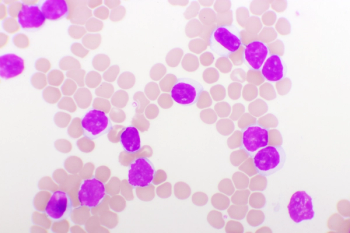
DNA sequencing to detect minimal residual disease and eventual relapse was more accurate than flow cytometry for adult and pediatric patients with acute lymphoblastic leukemia who have been treated with tisagenlecleucel.
The FDA has requested more time to review data from 3 pivotal trials featuring pacritinib for the treatment of intermediate or high-risk primary or secondary myelofibrosis with severe thrombocytopenia, thus extending the review period for the agent’s new drug application.

Pediatric patients with KMT2A-rearranged acute myeloid leukemia who were treated with gemtuzumab ozogamicin plus standard chemotherapy experienced improved event-free survival and a reduced relapsed risk.

Patients with bladder cancer reported improvements in physical and social scores following radical cystectomy, although body image and sexual functioning scores decreased.
Patients with high-grade and low-grade brain tumors who carry the BRAF V600E mutation were treated with dabrafenib and trametinib saw clinically meaningful results.

Olaparib, which was granted priority review by the FDA, has been shown to improve invasive disease-free survival for patients with BRCA-mutated HER2-negative high-risk early breast cancer.
Patients who were given extended 5-year treatment with letrozole plus 2 to 3 years of tamoxifen experienced an improvement in disease-free survival compared with 2 to 3 years of treatment with letrozole.

Men with localized prostate cancer were most likely to select treatment with radiotherapy over surgery and its associated adverse effects.