






Breast Cancer
Latest News
Advertisement
Latest Videos








CME Content































Advertisement
More News

Patients with hormone receptor–positive, ERBB2-negative high-risk early breast cancer who received neoadjuvant chemotherapy and adjuvant abemaciclib plus endocrine therapy experienced invasive disease-free survival and distant relapse-free survival benefit vs those with adjuvant endocrine therapy alone.

After identifying several factors independently associated with the risk of breast cancer–related lymphedema following axillary lymph node dissection, investigators recommend further studies to examine biologic mechanisms behind racial and ethnic disparities within this space.

Steven J. Chmura, MD, PhD, spoke about interesting findings from a phase 2R/3 trial of patients with newly oligometastatic breast cancer who were given standard of care systemic treatment with or without stereotactic body radiotherapy and/or surgical resection.

Independent factors such as the integrated clinical radiomics model and 18F-FDG PET/CT radiomics signature may be predictive of progression-free survival in breast cancer.
Hope S. Rugo, MD, FASCO, spoke about future analyses of the phase 3 TROPiCS-02 trial that examined sacituzumab govitecan vs physicians’ choice chemotherapy in patients with hormone receptor–positive, HER2-negative advanced breast cancer.
Hope S. Rugo, MD, spoke about results of the phase 3 TROPiCS-02 trial examining sacituzumab govitecan vs physicians’ choice chemotherapy for patients with hormone receptor–positive, HER2-negative advanced breast cancer presented at ASCO 2022.

Dose reductions of ribociclib administered during the phase 2 MONALEESA-2 trial did not have an impact on overall survival for patients with hormone receptor–positive, HER2-negative advanced breast cancer.
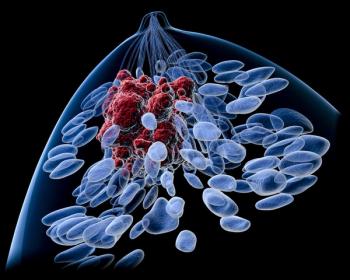
Radiotherapy can be avoided after surgery in certain patients with low-grade luminal A breast cancer who have low Ki67 expression and no positive lymph nodes, according to data from 2022 ASCO.

Patients with acquired ESR1 mutations after disease progression and post-treatment for locally advanced or metastatic estrogen receptor–positive, HER2-negative breast cancer may benefit from treatment with lasofoxifene in combination with abemaciclib.

Results of a matching-adjusted indirect comparison study showed that patients with HR-positive/HER2–negative advanced breast cancer treated with ribociclib and an aromatase inhibitor were more likely to have better symptom-related quality of life than patients who received abemaciclib and an aromatase inhibitor.

Factors associated with early discontinuation of adjuvant abemaciclib for hormone receptor—positive, HER2-negative, node-positive high-risk early breast cancer inform future treatment monitoring.
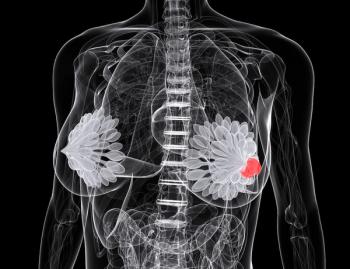
Alpelisib combined with fulvestrant represents a viable treatment option for patients with hormone receptor–positive, HER2-negative advanced breast cancer, regardless of mutation status.

The phase 3 DESTINY-Breast04 trial using fam-trastuzumab deruxtecan-nxki showed a reduction in the risk of disease recurrence or death for patients with HER2-low, hormone receptor–positive metastatic breast cancer.
Patritumab deruxtecan induced positive efficacy, according to the phase 1/2 U31402-J101 trial in patients with HER3-expressing metastatic breast cancer or metastatic triple-negative breast cancer.

At 2022 ASCO, final survival data from the phase 3 PALOMA-2 trial confirmed similar survival between palbociclib plus letrozole and letrozole alone.

Ribociclib plus endocrine therapy for hormone receptor–positive, HER2-negative advanced breast cancer following progression on a CDK4/6 inhibitor bests matched placebo.

Compared with chemotherapy, sacituzumab govitecan led to better progression-free survival outcomes in patients with hormone receptor–positive, HER2-negative breast cancer.
European patients with locally advanced or early-stage triple-negative breast cancer at high risk of recurrence can now receive treatment with neoadjuvant pembrolizumab and chemotherapy, as well as pembrolizumab monotherapy post surgery following its approval by the European Commission.

A Black patient with metastatic breast cancer explained that the results of the survey show that more work must be done by all stakeholders to increase the participation in clinical trials to accurately assess treatments in diversified populations.
Using skin-sparing mastectomy and immediate deep inferior epigastric perforator flap reconstruction following preoperative radiotherapy was safe and feasible in patients with primary breast cancer.

A look at the evolving role of neurooncologists in the treatment of patients with HER2+ breast cancer and brain metastases and future perspectives in the management of this patient population.

Experts have a conversation of the use of trastuzumab deruxtecan therapy for patients with progressive brain metastases while weighing common toxicities and clinical trial data.

Program chair Aditya Bardia, MD, MPH, invites you to PER®’s complimentary in-person and virtual satellite symposium.

Patients with estrogen receptor–positive, HER2-negative advanced or metastatic breast cancer may receive alternative treatment with switch maintenance endocrine therapy and bevacizumab and experience notable efficacy and improved safety vs continued weekly paclitaxel and bevacizumab.
Findings from a post-hoc analysis identified disparities in Black patients with early hormone receptor–positive breast cancer that could not be explained by early discontinuation of endocrine therapy, clinicopathologic characteristics, insurance coverage, or neighborhood deprivation index.
Advertisement
Advertisement
Trending on CancerNetwork
1
Modifiable Risk Factors Suggest Potential for Improving Cancer Prevention
2
Barriers to CAR T-Cell Referral and Center Access in Multiple Myeloma
3
2026 Tandem Meetings: What’s the Latest Research in Multiple Myeloma?
4
Real World Outcomes of CAR T-Cell Therapy in Multiple Myeloma Including Older and Comorbid Patients
5