


































The greater distance a patient had to travel to reach a diagnosing facility the more likely that patient was to present with a higher stage disease of colon cancer, according to the results of a recent study.

Your AI-Trained Oncology Knowledge Connection!
The greater distance a patient had to travel to reach a diagnosing facility the more likely that patient was to present with a higher stage disease of colon cancer, according to the results of a recent study.

A high body mass index prior to a colorectal cancer diagnosis is linked to a higher risk of death, even when the patient’s tumor type is generally associated with a better prognosis.
A new study reports that a multitarget stool DNA test is sensitive and accurate and is an improvement over previous DNA stool-based detection tests.

The rates of colon cancer in US adults aged 50 and older have decreased by 3% per year over the last 10 years, with the largest decrease seen in those over the age of 65.

Current evidence suggests that only four DPYD and TYMS variants should make up the panel of genetic biomarkers for testing for toxicity to capecitabine monotherapy, according to the results of a recent study.

The use of full-spectrum colonoscopy significantly decreased the number of adenomas missed during an examination compared with the use of forward-viewing colonoscopy, according to the results of an international, multicenter study.
Molecularly profiling colorectal cancer has opened many potential opportunities for the use of this information in therapeutic decision-making. However, at present, only RAS testing in the metastatic setting has a definitive place in the decision-making paradigm.
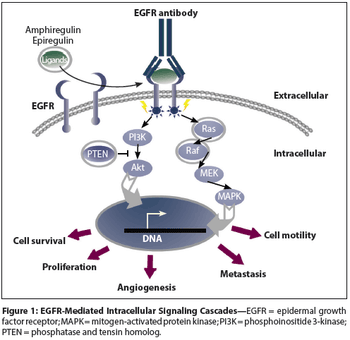
In this review we discuss the current treatment options in metastatic colon cancer, with a special focus on biologic agents and how molecular understanding guides treatment decisions.
It was originally hoped that the presence of mutations in KRAS and other related genes would provide an easy answer as to whether to administer anti-EGFR antibody therapy to a given metastatic colorectal cancer patient. However, in nature nothing is simple, and there are a number of issues that practicing clinicians should be made aware of.
Progress in the area of targeted therapies for colorectal cancer has come slowly and with some difficulty.

Researchers have developed a new online risk assessment tool that can accurately estimate an individual’s risk of developing colorectal cancer.
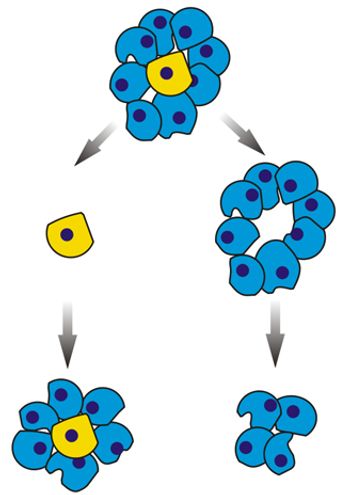
In a new study using mice, researchers show that targeting the protein BMI-1 in colorectal cancer can eliminate the self-renewing cell population and lead to long-term inhibition of tumor growth.

A decreased diversity of gut microbiota was associated with an increased risk of colorectal cancer, according to the results of a new study.

In this podcast, we discuss whether all male colorectal cancer patients over the age of 60 should be screened for prostate cancer.
The surgical strategies of “classic, reversed, or combined” resection of colorectal cancer and colorectal liver metastases have to be tailored to a specific patient, and all three strategies have a role in the treatment of stage IV colorectal cancer today.
There is limited data available to guide decision making in the management of colorectal liver metastases. Despite a trend toward increased use of perioperative chemotherapy, others have questioned the role of this approach in patients with solitary lesions and a longer disease-free interval.
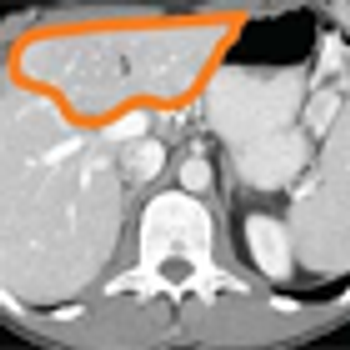
In a good percentage of patients who have oligometastatic disease confined to a single organ-usually the liver-complete metastasectomy can result in cure. However, once the decision to pursue surgery is made, there remain a number of issues that must be addressed in order to ensure the best possible outcome.
The two drug combination of cetuximab plus brivanib alaninate worsened quality of life and did not improve overall survival in patients with KRAS wild-type metastatic colorectal cancer.
No difference in overall survival was seen for surgery with or without FOLFOX4 in patients with initially resectable liver metastases from colorectal cancer, according to the results of a new study.

We discuss colorectal cancer screening with two gastroenterologists, including results from two recently published studies showing long-term effects of screening.
A prospective trial needs to be done in order to create a safe and responsible environment in which to offer patients the watch-and-wait option for rectal cancer.
We also propose that limiting the watch-and-wait strategy to patients with T1/T2N0 rectal cancer and using adequate T staging with MRI will result in improvements in local control and patient outcomes.
Once a patient has been appropriately educated by an informed healthcare provider about the possible benefits of PSA screening, then patient preference as part of shared decision making regarding PSA screening should be considered in all cases.
It may be appropriate to offer prostate cancer screening to carefully selected men with a previous history of colorectal cancer. However, the risks and benefits of establishing the diagnosis in this setting need to be considered and discussed with them.
Not all patients with colorectal cancer are candidates for such screening, however, as a remaining life expectancy of at least 10 years is generally required in order for PSA screening to yield a significant mortality benefit.