
































A new study published in Nature Communications is suggesting that castration-resistant prostate cancer has particular metabolic characteristics that may open new possibilities for treatment.

Your AI-Trained Oncology Knowledge Connection!
A new study published in Nature Communications is suggesting that castration-resistant prostate cancer has particular metabolic characteristics that may open new possibilities for treatment.
A team of surgeons performed the first genitourinary reconstructive penile transplant in the United States on a patient whose penis was removed due to a rare form of penile cancer.
The fatty acid DHA, a component of fish oil, might enhance regorafenib’s ability to slow angiogenesis and tumor growth in renal cell carcinoma.

The FDA has granted accelerated approval to atezolizumab (Tecentriq) for the treatment of locally advanced or metastatic urothelial carcinoma-the most common type of bladder cancer.
Partial nephrectomy yields similar oncologic outcomes to radical nephrectomy for patients with stage T3a renal tumors after 5 years, according to results of a new study.
The FDA approved lenvatinib (Lenvima) in combination with everolimus for the treatment of advanced renal cell carcinoma.
A 56-year-old man presented with a 4.5-cm leftsided renal mass incidentally discovered on an ultrasound performed for workup of lupus nephritis. On dedicated contrast-enhanced magnetic resonance imaging (MRI), the tumor was found to be avidly enhancing.
Only one in three men with prostate cancer received care in accordance with guidelines for active surveillance, according to a new study conducted in Michigan.
A new study found that FGFR3 mutation status could be used to guide anti-FGFR3 therapy in bladder cancer, as the mutation is homogeneous in radical cystectomy specimens and cancer-positive lymph nodes.

Clinicians now have a new targeted therapy option for treating patients with advanced renal cell carcinoma (RCC) who have received prior antiangiogenic therapy.

Declines in the rates of cigarette smoking in several states mirrored declines in prostate cancer deaths between 1999 and 2010, according to a new epidemiologic analysis.
Prostate cancer patients who kept up a moderate to high level of physical activity had better survival prognoses compared with their more sedentary counterparts.
Combination therapy with bicalutamide and everolimus resulted in promising responses in a phase II trial of patients with castration-resistant prostate cancer, though a substantial proportion of patients experienced everolimus-related toxicities.
Afatinib showed significant activity in a phase II trial of patients with metastatic platinum-refractory urothelial carcinoma, and patients with HER2 or ERBB3 alterations had significantly better outcomes.
Twelve US lawmakers have asked the Obama administration to scrutinize the pricing of the prostate cancer agent enzalutamide and to consider licensing its generic production.
Men who receive pharmacologic androgen deprivation therapy as part of their treatment for prostate cancer may be at higher risk for depression.
Results of a phase II randomized trial found that combining a short course of androgen deprivation therapy with bevacizumab improved relapse-free survival in men with hormone-sensitive prostate cancer.
Researchers at UCLA are reporting that prostate adenocarcinoma and neuroendocrine prostate cancer can arise from a common epithelial clone.
A study published in Nature Medicine reports that suppressing the nuclear receptor protein ROR-γ with small-molecule compounds may reduce AR levels in CRPC and stop tumor growth.
Using simulation modeling, researchers found that PSA screening can be cost-effective if men with low-risk prostate cancer do not undergo treatment and if clinicians use restrictive criteria to make a decision to biopsy.
The diabetes drug pioglitazone was associated with an increased risk for bladder cancer among patients with type 2 diabetes, according to the results of a new study.
Targeted therapies have offered striking improvements in survival rates among white patients who are diagnosed with clear cell renal cell carcinoma (ccRCC) in recent years, but survival rates for African Americans have not budged.
The phase III HYPRO study failed to prove the non-inferiority of using hypofractionated radiotherapy compared with fractionated radiotherapy for late genitourinary and gastrointestinal toxicity in men with intermediate- or high-risk prostate cancer.
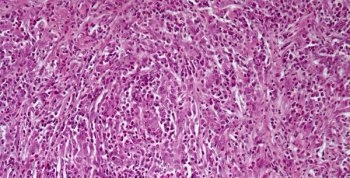
A 58-year-old man presents with symptoms of dysuria and a prostate biopsy is performed. What is your diagnosis?
The American Society of Clinical Oncology endorsed the European Association of Urology’s treatment guideline on muscle-invasive and metastatic bladder cancer.