



Multiple Myeloma
Latest News


FDA Withdraws Melphalan Flufenamide Approval Status in Multiple Myeloma
By Russ Conroy
Advertisement
Latest Videos



CME Content































Advertisement
More News

Patients with relapsed/refractory multiple myeloma can now receive teclistamab at 1.5 mg/kg every 2 weeks following the FDA’s latest approval.

Experts in multiple myeloma debated the use of teclistamab through an inpatient or outpatient setting.

Vanderbilt University Medical Center and Winship Cancer Institute at Emory University Face Off on recent data in multiple myeloma and acute lymphoblastic leukemia.

Results from the phase 3 DREAMM-7 trial highlighted an efficacy benefit with belantamab mafodotin plus bortezomib and dexamethasone in patients with relapsed/refractory multiple myeloma.

Examine the efficacy and safety of the BCMA-targeting bispecific antibody elranatamab as monotherapy and in combinations from the Phase 2 MagnetisMM-3 trial in patients with relapsed or refractory multiple myeloma.

Findings from the phase 1/2 LINKER-MM1 trial support the marketing authorization application for linvoseltamab in the management of relapsed/refractory multiple myeloma.
Ursula Linne-Mclaren briefly discusses valuable guidance for patients and caregivers, particularly those considering bispecific therapies, providing a supportive perspective on the journey through R/R MM treatment.
Nurse Linne-Mclaren provides her insights into the proactive measures, monitoring strategies, and experiences related to talquetamab-associated adverse events, along with a broader perspective on prophylactic measures for managing potential adverse events in bispecific therapies.
Ursula Linne-Mclaren, RN, reviews a clinical scenario in a relapsed/ refractory multiple myeloma patient.

Findings from the phase 3 PERSEUS trial support the supplemental New Drug Application for the daratumumab and hyaluronidase-fihj combination in transplant-eligible newly diagnosed multiple myeloma.
Patients with multiple myeloma appear to feel confident in being able to report adverse effects associated with bortezomib independently via digital tools.

A positive CHMP opinion may lead to an approval of idecabtagene vicleucel in the European Union for patients with relapsed/refractory multiple myeloma.
Adding daratumumab to VRd induction and consolidation therapy plus lenalidomide maintenance provides a benefit with respect to MRD-negative status among patients with multiple myeloma.

Present initial results from the Phase 1 RedirecTT-1 trial exploring the combination of teclistamab and talquetamab in relapsed/refractory multiple myeloma.

Compare outcomes between ide-cel chimeric antigen receptor T-cell (CAR-T) therapy and standard treatment regimens such as pomalidomide and daratumumab combinations in patients with heavily pretreated relapsed and refractory multiple myeloma.

Oncology Clinical Pharmacist Specialist Amir Ali delves into potential challenges related to access and the use of this therapy, providing a comprehensive perspective on the complexities of incorporating GPRC5-targeting bispecifics into R/R MM patient management.
Amir discusses challenges encountered during the administration process, offering valuable perspectives on the practical considerations and complexities in delivering these innovative therapies.
Amir Ali, PharmD reviews a clinical scenario in a relapsed/ refractory multiple myeloma patient.

Present real-world data on the efficacy and safety of the ixazomib-lenalidomide-dexamethasone combination in patients with relapsed/refractory multiple myeloma outside of clinical trials.

Examine outcomes such as overall survival, progression-free survival, and response rates in multiple myeloma patients who have experienced biochemical or clinical progression after prior lines of therapy.
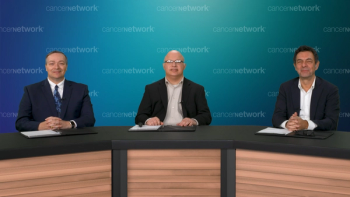
Experts dive into the complexities of defining and treating high-risk Multiple Myeloma (MM) and discuss the role of ASCT in newly diagnosed MM and weigh the considerations for recommending transplants, including insights on the selection criteria for tandem transplantations.
Philippe Moreau, MD, discusses recent data from the IFM 2018 trial which evaluated Dara-KRd induction and consolidation plus double transplants in high risk, TE NDMM.

An expert briefly reviews the role of GPRC5C-targeting bispecifics in Relapsed/Refractory Multiple Myeloma (R/R MM) following four previous lines of therapy, comparing its efficacy and characteristics with other treatment options like BCMA and CAR-T therapies. She also provides insights into the benefits, risks, and potential challenges related to the access and utilization of GPRC5D-targeting bispecifics, providing a comprehensive overview of considerations in the advanced R/R MM treatment landscape.
Dr. Costello explores the mechanism of action (MOA) of talquetamab and its distinctive role in Relapsed/Refractory Multiple Myeloma (R/R MM), drawing comparisons with other bispecific therapies.

A group of experts discussed the approval process for teclistamab use in patients with multiple myeloma.
Advertisement
Advertisement
Trending on CancerNetwork
1
Modifiable Risk Factors Suggest Potential for Improving Cancer Prevention
2
Barriers to CAR T-Cell Referral and Center Access in Multiple Myeloma
3
2026 Tandem Meetings: What’s the Latest Research in Multiple Myeloma?
4
Real World Outcomes of CAR T-Cell Therapy in Multiple Myeloma Including Older and Comorbid Patients
5