




Multiple Myeloma
Latest News
Advertisement
Video Series



Latest Videos




CME Content
































Advertisement
More News

The safety profile of teclistamab-based therapy in the MajesTEC-5 trial was expected based on the known compounds employed in each combination.
Treatment with ISB 2001 led to an overall response rate of 74% across dose levels 1 to 9 in patients with relapsed/refractory multiple myeloma.
Adverse effects were manageable when patients with heavily pretreated multiple myeloma were given cevostamab consolidation after receiving CAR T-cell therapy.

MRD-negative remission was achieved in 74.8% of all patients with newly diagnosed multiple myeloma treated with isatuximab, carfilzomib, lenalidomide, and dexamethasone.
Additional time is necessary to confirm the depth and durability of responses observed in the phase 1 CAMMA 1 study.
Responses observed with the elranatamab-based regimen in the MagnetisMM-6 trial are anticipated to deepen with longer follow-up.
![We found that patients who are [complete remission] MRD-negative, and PET/CT negative year after year for 5 years do not have to be maintained.](https://cdn.sanity.io/images/0vv8moc6/cancernetwork/a0c5316b5733cfe8ccceb396476faf0cea2f2e46-320x410.png?w=350&fit=crop&auto=format)
According to Sundar Jagannath, MBBS, the cure for multiple myeloma was observed in patients who were cancer free for 5 years without maintenance therapy.
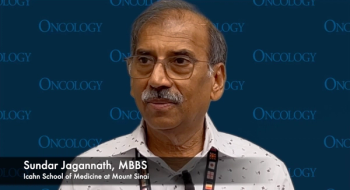
Sundar Jagannath, MBBS, said that when a cure is defined for patients with multiple myeloma, specific patients may be able to stop therapy without a risk of relapsing.
Results from the phase 1b/2 CARTITUDE-1 trial showed that after patients receiving cilta-cel were disease-free for 5 years, they did not need maintenance therapy.
The approach to treating patients with multiple myeloma will change for physicians, pharmaceutical companies, and even patients themselves.
Data from the AQUILA trial support early intervention with fixed-duration subcutaneous daratumumab for those with high-risk smoldering multiple myeloma.
An observational study reported that results with elranatamab for patients with RRMM from the MagnetisMM-3 trial were superior to what was observed across 5 centers in the UK.

The safety profile of carfilzomib, lenalidomide, and dexamethasone was tolerable in fit patients with newly diagnosed multiple myeloma.

Bridging therapy with talquetamab achieved “notable” disease control among patients with multiple myeloma in a retrospective study.

A systematic review of 8 randomized trials showed that anti-CD38 monoclonal antibodies did not improve overall survival in high-risk subgroups.
Phase 3 findings may contribute to the selection of triplet or quadruplet therapies in newly diagnosed multiple myeloma via frailty-based assessments.
Experts discussed teclistamab's efficacy in multiple myeloma, highlighting real-world data and treatment protocols.
Cilta-cel shows promising long-term efficacy in treating relapsed/refractory multiple myeloma, with significant survival rates and manageable safety profiles.

Experts discussed talquetamab's unique mechanism and favorable patient outcomes in relapsed/refractory multiple myeloma.
Experts debate cutting-edge multiple myeloma treatments, exploring pressing data, the most prominent news, and patient cases.

A panel of clinical pharmacists discussed strategies for mitigating toxicities across different multiple myeloma, lymphoma, and leukemia populations.
![“Every patient [with multiple myeloma] should be offered CAR T before they’re offered a bispecific, with some rare exceptions,” said Barry Paul, MD.](https://cdn.sanity.io/images/0vv8moc6/cancernetwork/70a5f0fed7009863fe30cf0740cf32014ebaf5be-2974x1660.png?w=350&fit=crop&auto=format)
“Every patient [with multiple myeloma] should be offered CAR T before they’re offered a bispecific, with some rare exceptions,” said Barry Paul, MD.
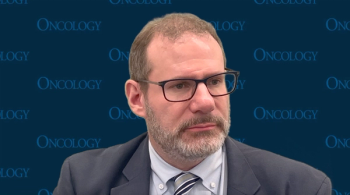
Barry Paul, MD, listed cilta-cel, anito-cel, and arlo-cel as 3 of the CAR T-cell therapies with the most promising efficacy in patients with multiple myeloma.

Shebli Atrash, MD, believes the future for treatment in multiple myeloma, as well as in solid tumors and beyond, includes immune therapies.
Elucidating nonresponses to bispecific T-cell engagers may be an important research consideration in the multiple myeloma field.
Advertisement
Advertisement
Trending on CancerNetwork
1
Modifiable Risk Factors Suggest Potential for Improving Cancer Prevention
2
2026 Tandem Meetings: What’s the Latest Research in Multiple Myeloma?
3
Dato-DXd Receives Priority Review in Unresectable/Metastatic TNBC
4
Barriers to CAR T-Cell Referral and Center Access in Multiple Myeloma
5