





Leukemia
Latest News

Advertisement
Latest Videos





CME Content































Advertisement
More News

As more novel therapeutic targets are discovered in patients with chronic lymphocytic leukemia, the more possibilities are presented in terms of treatment with targeted agents, small molecules, and cellular therapies.

Patients with previously treated chronic lymphocytic leukemia and small lymphocytic lymphoma appeared to benefit from treatment with pirtobrutinib.

The latest episode of the ASTCT Talks episode features John DiPersio, MD, PhD, on emerging therapies in the treatment of acute myeloid leukemia.
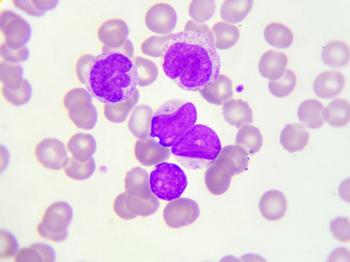
Strong response rates were observed with pirtobrutinib across dose levels to treat patients with chronic lymphocytic leukemia and small lymphocytic lymphoma ion a phase 1/2 study.

The introduction of targeted therapies and immunotherapeutics may work to improve survival for patients with T-cell acute lymphoblastic leukemia.

Clinical decision-making based on minimal residual disease may be associated with improved therapy satisfaction and optimized post-remission treatment for patients with intermediate-risk acute myeloid leukemia.

A recent study provides evidence showing that focal 22q11.22 deletions may be correlated with poor outcomes in patients with pediatric B-cell acute lymphoblastic leukemia with alterations in IKZF1.
After implementing disparity and demographic reporting in acute leukemia clinical trials, investigators did not report an increase in diverse trial participants.
Pediatric patients with low-risk acute lymphoblastic leukemia may be able to omit treatment with vincristine and dexamethasone pulse therapy after the first year of treatment.

The risk of infection during induction chemotherapy decreased among patients with acute myeloid leukemia treated with romyelocel-L.
Compared with anti-thymocyte globulin, post-transplant cyclophosphamide appears to more successfully prevent graft-versus-host disease in patients with acute lymphoblastic leukemia, resulting in a lower incidence of relapse and improved survival.

Patients with chronic lymphocytic leukemia/small lymphocytic lymphoma were pretreated with ibrutinib saw a reduction in obinutuzumab-induced infusion-related reactions as well as cytokines and chemokines.
A systemic review and network meta-analysis investigated 3 trials and determined that acalabrutinib/obinutuzumab up front prolongs progression-free survival for patients with chronic lymphocytic leukemia vs other regimens.

A study published in Lancet Oncology indicated that children with low-risk acute lymphoblastic leukemia may be able to safely omit pulse therapy after 1-year of treatment.
Pediatric and adolescent patients with acute lymphoblastic leukemia experienced similar outcomes when treated with either calaspargase pegol or pegaspargase.
Eytan Stein, MD, considers promising, new therapeutic options for adult patients with acute myeloid leukemia.
Dr Stein elaborates on some practical considerations for the use of venetoclax and hypomethylating agents for the treatment of patients with chemotherapy-ineligible acute myeloid leukemia.
An expert lists the information physicians consider when choosing a first-line therapy for patients with chemotherapy-ineligible acute myeloid leukemia.
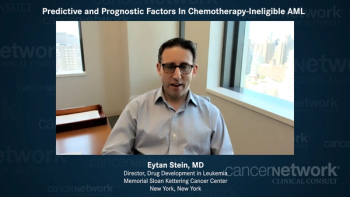
Eytan Stein, MD, discusses the predictive and prognostic factors for patients with chemotherapy-ineligible acute myeloid leukemia.

Combination ivosidenib/azacitidine has yielded notable improvements in survival over ivosidenib alone in IDH1-positive treatment-naïve acute myeloid leukemia.

Older adult patients with newly diagnosed high-risk or secondary acute myeloid leukemia experienced a durable survival benefit when treated with CPX-351 over 7+3 cytarabine and daunorubicin chemotherapy.

The SEQUOIA trial comparing zanubrutinib with bendamustine plus rituximab for patients with treatment-naïve chronic lymphocytic leukemia demonstrated superior progression-free survival results with the BTK inhibitor.
Patients with Philadelphia chromosome–negative acute lymphocytic leukemia who have hypersensitivity to pegylated asparaginase may benefit from eryaspase treatment.
A phase 1/2 trial featuring lanraplenib/gilteritinib in patients with FLT3-mutant acute myeloid leukemia will proceed following the FDA’s clearance of an investigational new drug application.
Results of a phase 2 trial show that ibrutinib was capable of inducing responses in some patients with hairy cell leukemia who were previously treated with standard therapy options in a prior line.
Advertisement
Advertisement
Trending on CancerNetwork
1
Modifiable Risk Factors Suggest Potential for Improving Cancer Prevention
2
2026 Tandem Meetings: What’s the Latest Research in Multiple Myeloma?
3
Barriers to CAR T-Cell Referral and Center Access in Multiple Myeloma
4
Dato-DXd Receives Priority Review in Unresectable/Metastatic TNBC
5