





Multiple Myeloma
Latest News
Advertisement
Latest Videos




CME Content

































Advertisement
More News

Samantha Shenoy, NP, MSN, suggests that support groups may help comfort patients experiencing adverse effects negatively impacting quality of life.

A nurse practitioner discussed how her role plays a vital part in patient care for those undergoing talquetamab treatment for multiple myeloma.

James R. Berenson, MD, describes ongoing efforts to evaluate treatment with JAK inhibitors like ruxolitinib among patients with multiple myeloma.
Samantha Shenoy, NP, MSN, emphasized educating patients with multiple myeloma to help prepare them for potential taste alterations after talquetamab.
Samantha Shenoy, NP, MSN, indicated that neurological issues were not prevalent with talquetamab, despite occurrences with other bispecifics antibodies.

Experts in multiple myeloma discussed optimal dosing strategies for bispecific antibodies for patients with relapsed/refractory multiple myeloma.

Panelists discuss how GPRC5D bispecific therapies have shown promising efficacy in real-world relapsed/refractory multiple myeloma patients.
Panelists discuss how their clinical experience with GPRC5D bispecific therapies has been limited or nonexistent due to the novelty of these treatments in multiple myeloma.

Mary Steinbach, APRN, shares her experience in managing dysgeusia and nail- and skin-related toxicities seen in patients with multiple myeloma who receive talquetamab.
Focusing on patients with multiple myeloma who receive GPRC5D-targeted therapy, Beth Faiman, CNP, PhD, discusses how long-term treatment impacts patients’ tolerance to adverse events.

Rafael Fonseca, MD, discusses the role of bispecifics in relapsed/refractory multiple myeloma and the implications of incorporating them into combination regimens.
The combination of talquetamab plus daratumumab yields improved patient outcomes in those with relapsed/refractory multiple myeloma.
Noopur Raje, MD, reviews clinical research on elranatamab combination therapy in patients with relapsed/refractory multiple myeloma.
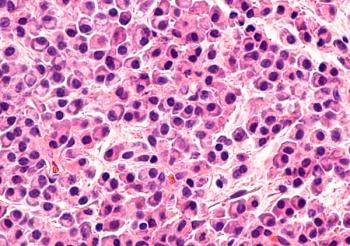
Combining talquetamab with teclistamab elicits responses even among those with extramedullary disease in the RedirecTT-1 trial.
Samantha Shenoy, NP, MSN, discussed common oral and dermatologic adverse effects associated with talquetamab in patients with myeloma.

Extended follow-up from the CASSIOPEIA trial illustrates the PFS and MRD benefits of daratumumab-based induction/consolidation and maintenance therapy.

A subgroup analysis from the PERSEUS trial showed sustained PFS benefit in patients with newly diagnosed multiple myeloma receiving D-VRd.

Responses appear to improve over time in those with transplant-eligible newly diagnosed multiple who receive the belantamab mafodotin-based combination.

Combination therapy with JAK inhibitors may help improve efficacy outcomes for patients with multiple myeloma.
James R. Berenson, MD, discussed adverse effects associated with oral ruxolitinib plus selinexor in patients with multiple myeloma.

Amrita Y. Krishnan, MD, and Binod Dhakal, MD, gave a high-level overview of teclistamab use in the MajesTEC-1 trial.

Experts highlighted the use of GPRC5D therapy in patients with multiple myeloma.

Findings from the phase 3 IMROZ trial support the FDA approval of the combination therapy for newly diagnosed not eligible for ASCT multiple myeloma.
Experts on multiple myeloma offer clinical insights on preparing patients who are going to receive GPRC5D therapy, highlighting step-up and treatment dosing for talquetamab.
Beth Faiman, CNP, PhD, outlines unique toxicities seen with other GPRC5D-targeted therapies in multiple myeloma.
Advertisement
Advertisement
Trending on CancerNetwork
1
Modifiable Risk Factors Suggest Potential for Improving Cancer Prevention
2
2026 Tandem Meetings: What’s the Latest Research in Multiple Myeloma?
3
Dato-DXd Receives Priority Review in Unresectable/Metastatic TNBC
4
Barriers to CAR T-Cell Referral and Center Access in Multiple Myeloma
5