



Prostate Cancer
Latest News
Advertisement
Latest Videos


Podcasts






CME Content































Advertisement
More News
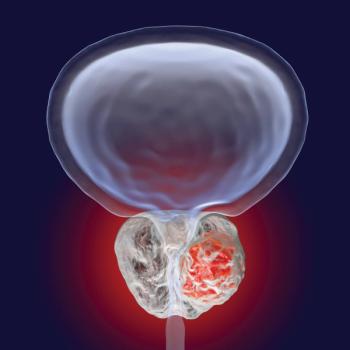
The adverse effect profile was similar among patients with prostate cancer using NeuroSAFE-assisted RARP vs standard RARP.

The new drug application for TLX007-CDx has been approved by the FDA for patients with prostate cancer.

A patient case of a 50-year-old man with hormone-sensitive prostate cancer sparked a debate among oncologists regarding the best course of action.
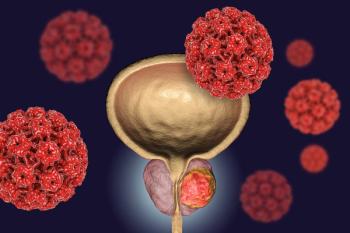
Prior data support the ability of PATHOMIQ_PRAD to predict patients at a high risk of biochemical recurrence and metastasis.
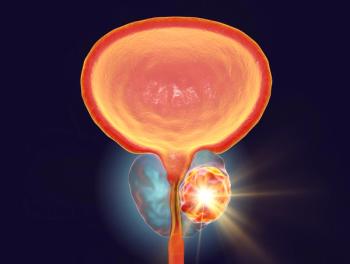
Results from the phase 1/2a SeCuRE trial support the FDA decision for patients with metastatic castration-resistant prostate cancer.

“Even after doing 10,000 of these operations, we are tweaking [the hood technique]…to make things better,” according to Ash Tewari, MD, MBBS, MCh, FRCS.
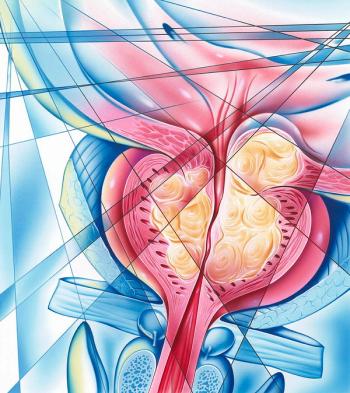
Data show improvements in overall survival and time to subsequent therapy initiation with darolutamide plus ADT/docetaxel.
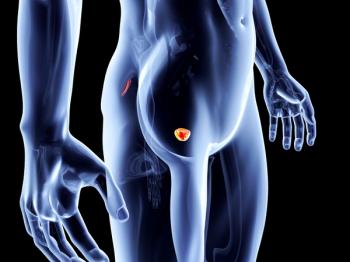
Olaparib plus abiraterone improved radiographic PFS and overall survival in mCRPC patients with germline or somatic BRCA mutations vs placebo plus abiraterone.
The hood technique, developed by Ash Tewari, MD, aids in facilitating earlier returns of continence with reduced residual cancer rates.
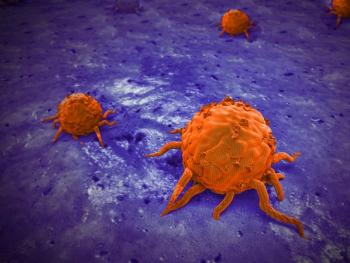
Patients who did not receive fish oil experienced a Ki-67 index increase of 24% vs the 15% Ki-67 index decrease for patients with a low omega-6, high omega-3 diet who received fish oil.
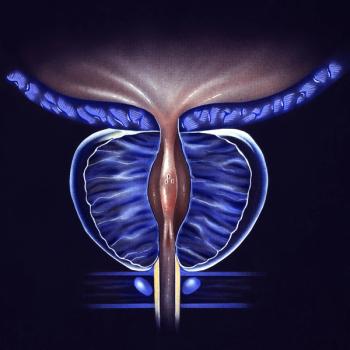
The ARANOTE phase 3 trial showed darolutamide plus ADT improved outcomes in mHSPC regardless of disease volume.
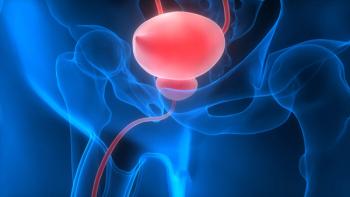
Phase 3 ARASENS trial results highlight the role of G-CSF in optimizing docetaxel delivery within the darolutamide-based regimen for mHSPC.
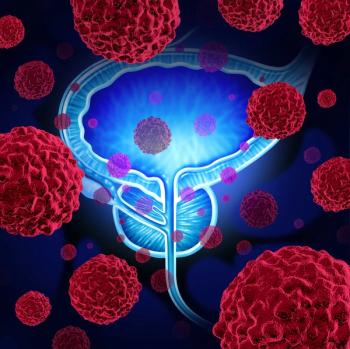
More adverse factors occurred in those with intermediate-risk prostate cancer undergoing neoadjuvant androgen deprivation therapy than those who did not.
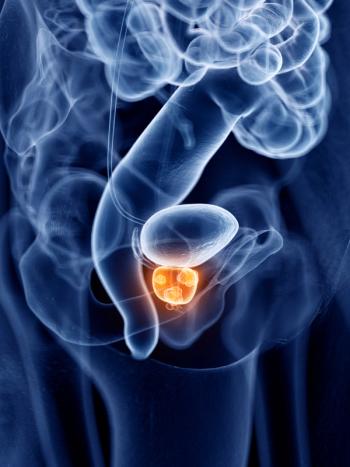
The TALAPRO-2 trial revealed promising survival data for patients with metastatic CRPC treated with talazoparib and enzalutamide.
The imaging agent led to changes in intended treatment plans for 48% of patients with prostate cancer and biochemical recurrence after definitive therapy.

Standardizing surgical outcomes and better training oncologic surgeons may be accomplished through the use of AI.
The poly-ICLC trial seeks to develop a delivery mechanism to prostate cancer through different biomarkers.

Ablative technology may generate an immune response that can be enhanced via injected immunotherapy in patients with solid tumors.
Data show an early trend towards improved overall survival with capivasertib plus abiraterone and androgen deprivation therapy in CAPItello-281.
The VIOLETTE trial, which used OBT-fusion technology for patients with focal ablation of the prostate by microwave needles, released interim results.
Darolutamide with androgen deprivation therapy has shown promising efficacy and safety results for patients with hormone-sensitive prostate cancer.
Pembrolizumab with platinum-based chemotherapy yielded encouraging progression-free and overall survival outcomes in this patient population.
Stereotactic body radiotherapy showed noninferior biochemical or clinical failure compared with standard radiotherapy in select patients with prostate cancer.
Maha Hussain, MD, FACP, FASCO, spoke about BRCA testing and ctDNA as diagnostic tools and PSMA-imaging and -targeted approaches in prostate cancer.
Data from the ARANOTE trial may support darolutamide plus androgen deprivation therapy as a standard of care in metastatic HSPC.
Advertisement
Advertisement
Trending on CancerNetwork
1
Modifiable Risk Factors Suggest Potential for Improving Cancer Prevention
2
2026 Tandem Meetings: What’s the Latest Research in Multiple Myeloma?
3
Dato-DXd Receives Priority Review in Unresectable/Metastatic TNBC
4
Barriers to CAR T-Cell Referral and Center Access in Multiple Myeloma
5